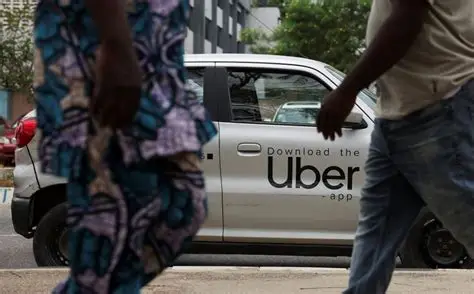
Former Uber drivers who moved to other ride-hailing platforms following the company’s exit from Nigeria are facing declining earnings as lower fares, commissions and rising operating costs reduce their take-home income.
Uber left the Nigerian market on September 2, 2026, after 12 years of operations, prompting many drivers to move to rival platforms including Bolt, inDrive and others.
However, some former Uber drivers say switching platforms has not brought the financial improvement they expected.
One app-based driver, Prince Seun, said he previously made about N70,000 in daily gross earnings on Uber, from which the platform deducted a 38 percent commission when he completed fewer than 20 trips.
On Bolt, he said his daily earnings have dropped to about N50,000, while the platform charges a 25 percent commission.
Based on his figures, Seun retained approximately N43,400 per day after Uber’s commission, compared with N37,500 on Bolt. This represents a difference of N5,900 daily, despite Bolt charging a lower commission.
The figures highlight how lower platform commissions may not necessarily translate into higher take-home earnings when fares and overall trip revenue decline.
Jaiyesimi Azeez, Lagos State chairman of the Amalgamated Union of App-based Transporters of Nigeria (AUATON), said the financial pressure extends beyond commissions.
He estimated that a driver generating N60,000 in gross fares could spend about N16,200 on commission, N25,000 on fuel, N6,000 on feeding, N2,000 on miscellaneous expenses and N10,000 on vehicle remittance.
That would bring total daily expenses to N59,200, leaving the driver with only N800 from the N60,000 gross earnings, based on an assumed 27 percent commission.
Azeez said the calculation also takes into account costs such as vehicle repairs, tyres, routine servicing and levies. He added that vehicle remittances apply to drivers using cars owned by other people and claimed that about 90 percent of e-hailing drivers do not own the vehicles they operate.
For some former Uber drivers, the challenges began even before the company’s departure.
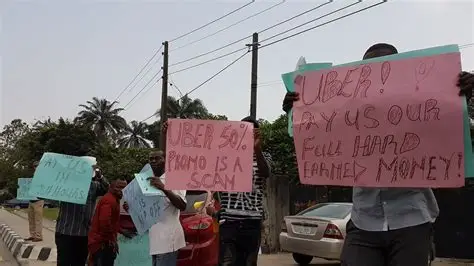
One former driver, who spoke anonymously, attributed Uber’s exit to a combination of high commissions, falling fares, relaxed vehicle requirements and what the driver described as poor engagement with operators.
The driver said Uber initially attracted drivers with relatively high fares and strict vehicle standards, allowing some operators to earn reasonable returns from just three or four trips a day.
“However, the company subsequently reduced fares while maintaining commissions of about 35 percent, making it increasingly difficult for operators to cover fuel and other operating expenses.
“When the fare is so poor and you still want to take 35 percent of something that’s already poor, how do you expect drivers to survive?” the driver said.
The driver also said some operators began accepting rides offline to avoid platform commissions, while others stopped using the app altogether.
For former Uber drivers, the experience across different platforms shows that commission rates alone do not determine how much they earn.
With fares fluctuating and fuel, vehicle maintenance and other operating expenses remaining significant, drivers’ actual take-home income depends on what remains after platform deductions and daily running costs.
