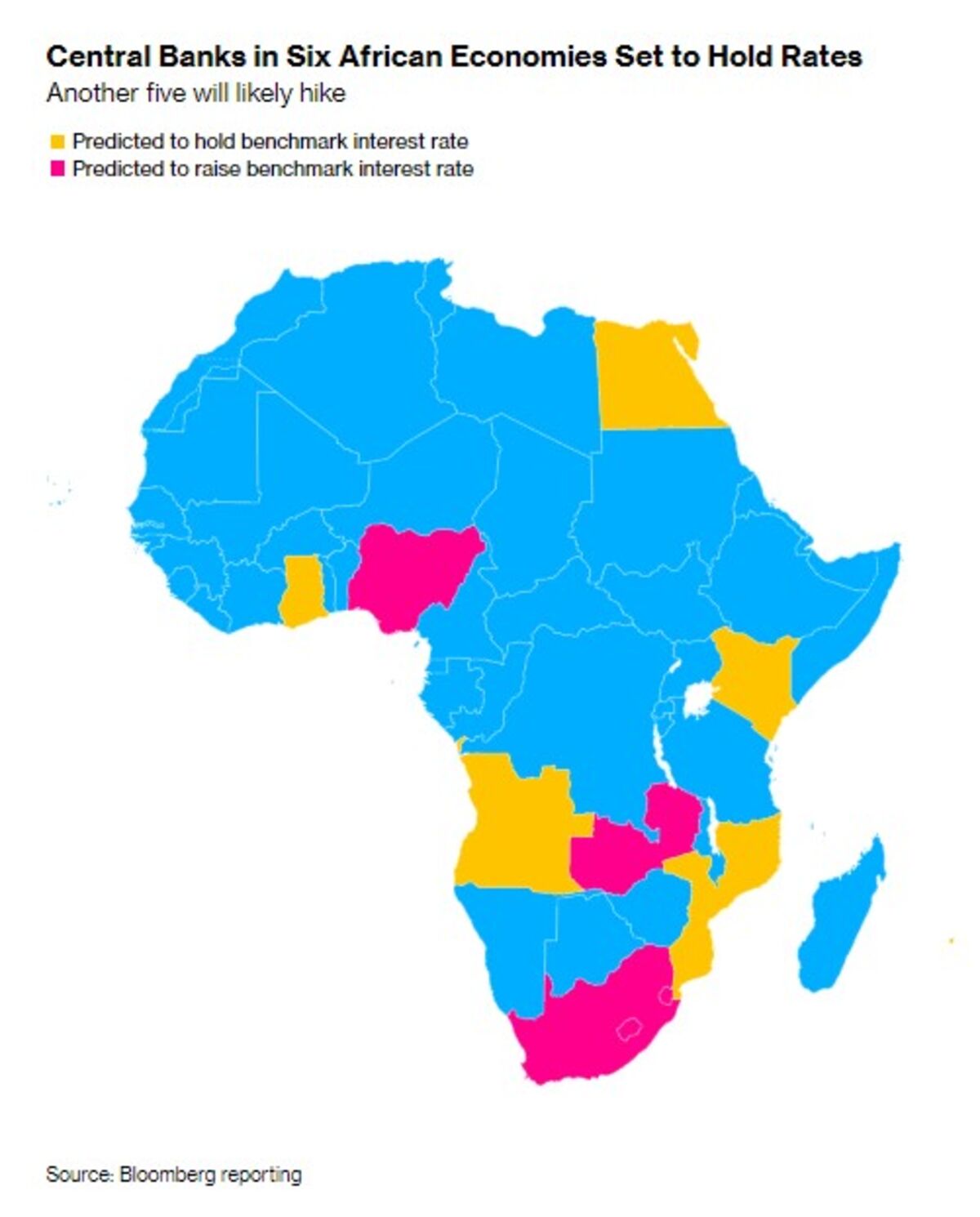
Central banks in East Africa are maintaining cautious monetary policies as inflationary pressures and global economic uncertainties continue to shape the region’s outlook.
Kenya’s central bank kept its benchmark Central Bank Rate unchanged at 8.75 percent on October 7, marking the fourth consecutive policy meeting at which the rate has remained unchanged. (Central Bank of Kenya)
The Central Bank of Kenya said inflation had increased slightly in recent months but was still expected to remain within its target range in the near term. Kenya’s annual inflation rose to 6.8 percent in September from 6.6 percent in August, moving closer to the upper end of the bank’s 2.5–7.5 percent target range. (Central Bank of Kenya)
Kenya raises growth outlook
Alongside its rate decision, the Central Bank of Kenya raised its 2026 economic growth forecast to 5 percent from 4.9 percent previously.
The bank said economic activity remained resilient, particularly in the industrial and services sectors. Private-sector credit growth also accelerated to 10.6 percent in September from 10.3 percent in August, suggesting that previous rate cuts are still working through the economy. (Business Daily)
However, the bank identified weather conditions, including the El Niño phenomenon, as a risk to the growth outlook. It also expects Kenya to record a current-account deficit equivalent to 3.2 percent of GDP in 2026. (MarketScreener)
Inflation remains a regional concern
The cautious approach from policymakers comes amid persistent external pressures, including higher energy costs and uncertainty linked to global geopolitical developments.
The Bank of Uganda has previously warned that energy-price pressures could feed into inflation across African economies. Its monetary policy report noted that inflation had risen across several major African economies as higher energy costs passed through to transport and other consumer prices. (Bank of Uganda)
Currency movements are adding to the pressure in some markets. Uganda’s shilling, for instance, has come under renewed pressure from strong foreign-currency demand, while Kenya’s shilling has remained comparatively stable, supported by foreign-exchange inflows and strong reserves. (Reuters)
Regional coordination gains importance
The rate decisions come as East African countries work towards greater monetary and fiscal coordination under the East African Monetary Union framework.
The East African Community is reviewing measures to strengthen coordination between fiscal authorities and central banks, improve macroeconomic stability and advance preparations for a proposed regional single currency. (East African Community)
The EAC says its convergence framework includes targets such as keeping headline inflation at or below 8 percent, maintaining foreign-exchange reserves equivalent to at least 4.5 months of imports, limiting fiscal deficits to 3 percent of GDP and keeping public debt within agreed thresholds. (East African Community)
As inflation risks persist, policymakers across the region are likely to remain focused on balancing price stability with economic growth and financial-market stability.
