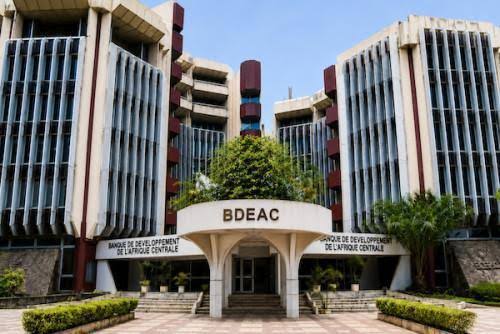
Section: AFRICA (Cameroon / CEMAC)
BRAZZAVILLE, November 25 (Radarr Africa) – The board of the Development Bank of Central African States (BDEAC) has approved raising a further FCFA 298.3 billion, following the success of its first Eurobond, the bank said in a communique dated November 23.
Directors gave the green light at an extraordinary session held by videoconference on November 18, 2026. The new funding follows the close on October 13 of the bank’s first Eurobond, a $222 million issue worth about FCFA 124.3 billion.
Board members described the Eurobond as a decisive milestone that diversified the bank’s sources of funding and raised its visibility with global investors, the communique said. The terms of the new issue have not been published.
The raise supports BDEAC’s 2023-2027 strategic plan, known as Azobe, which aims to mobilise more funds for projects across the six member countries of the Central African Economic and Monetary Community (CEMAC): Cameroon, Congo, Gabon, Equatorial Guinea, Chad and the Central African Republic.
Moody’s gave the bank its first foreign-currency rating in November 2025, at Ba3 with a stable outlook. The bank is led by Dieudonne Evou Mekou, a Cameroonian, and has its headquarters in Brazzaville, Congo.
At the end of 2025 BDEAC’s gross portfolio stood at FCFA 723.5 billion across 87 loans, of which 32 went to public borrowers and 55 to private ones. Net profit for 2025 rose 48.6% to FCFA 5.2 billion from FCFA 3.5 billion in 2024.
The bank is also active in the regional bond market of Central Africa, the BVMAC, based in Douala. Bonds on that market paid investors FCFA 76.5 billion in interest in 2023, of which FCFA 57 billion, or 74.5%, came from BDEAC.
The bank’s move comes as CEMAC sovereigns weigh the cost of borrowing on international markets. Cameroon raised $750 million through a private placement on January 30, 2026, at a yield of 10.125%, which the finance ministry put at 7.79% in euros after hedging.
Congo raised $850 million at 9.5% in May 2026 and used the proceeds to buy back $564 million of 9.875% notes due 2032, which extended maturities by four years and slightly lowered the coupon.
Outside CEMAC, Cote d’Ivoire raised $1.3 billion over 15 years on February 18, 2026, at 5.39% in euros after hedging, the economy ministry said. That is 2.4 percentage points below Cameroon’s post-hedging cost, over a longer maturity.
Gabon, another CEMAC member, borrowed at 12.7% in February 2025, the highest cost among three African Eurobond issues in the first half of that year, the African Peer Review Mechanism said. Part of the money went to buy back a Eurobond carrying a 6.95% coupon that was close to maturity.
Rating agencies place Cameroon four to five notches below Cote d’Ivoire, which is rated BB by two of the three major agencies and Ba2 by the third. Cote d’Ivoire’s borrowing cost has fallen from 6.60% in January 2024 to 5.39% in 2026.
The African Union’s Africa Credit Rating Agency was launched in Port Louis on October 7, 2026. It had not published a rating by November 11, according to the author of an analysis of African debt pricing published that month.
