Section: NIGERIA (Nigeria)
ABUJA, November 25 (Radarr Africa) – The Central Bank of Nigeria (CBN) left its Monetary Policy Rate (MPR) unchanged at 23% on Tuesday, citing upside risks to inflation from festive-season and pre-election spending at its last scheduled meeting before the January national election.
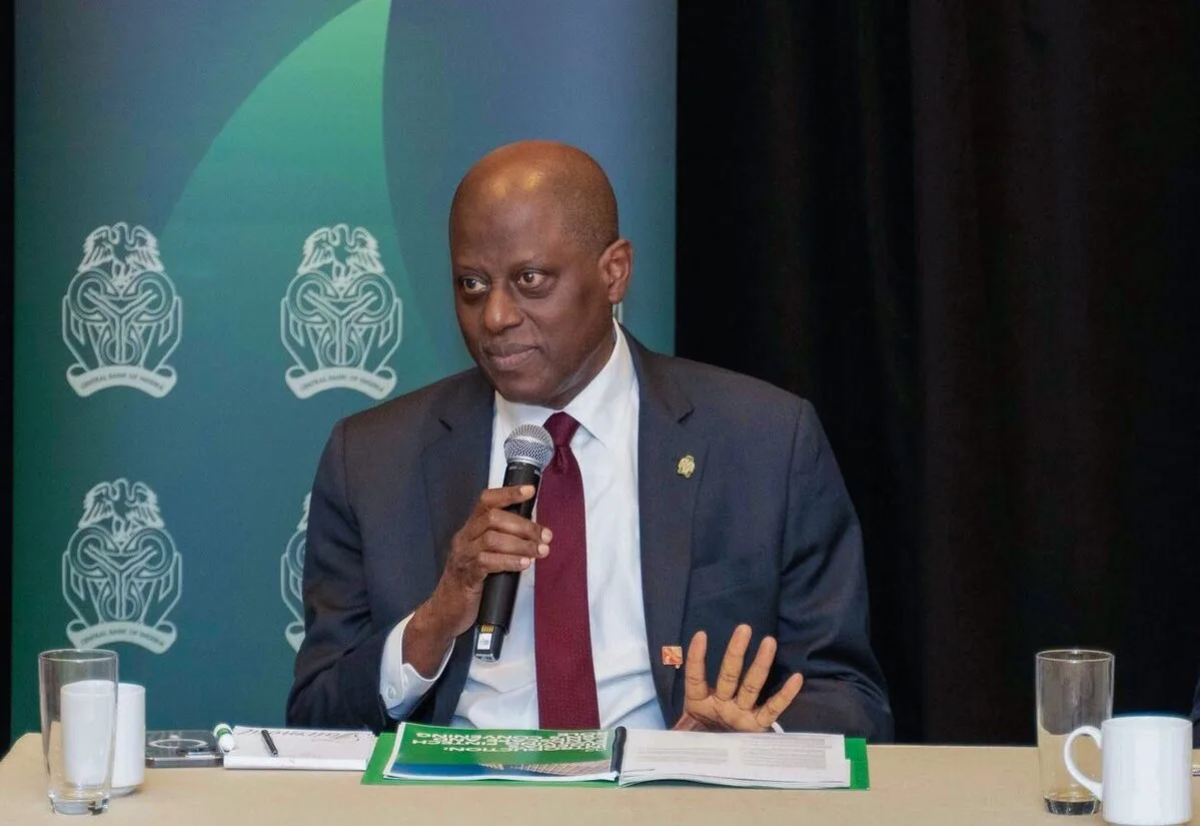
Governor Cardoso announced the decision after the 308th meeting of the Monetary Policy Committee (MPC) in Abuja. Members voted unanimously to retain the rate, and the outcome matched the consensus in a Reuters poll of economists.
The committee also kept the asymmetric corridor at plus 50 and minus 300 basis points around the MPR. The cash reserve requirement stays at 45% for deposit money banks, 16% for merchant banks and 75% for non-Treasury Single Account public sector deposits.
The hold follows a surprise cut of 350 basis points in September, when the MPR fell to 23% from 26.5%. The CBN said then that the move was meant to strengthen monetary policy transmission after market rates had diverged from its benchmark rate.
Data from the National Bureau of Statistics show headline inflation eased to 14.06% in October from 14.63% in September, the fifth straight monthly moderation. Food inflation slowed to 19.13% from 19.59%, which the data link to the harvest.
Cardoso said the committee was mindful of lingering upside inflation risks, including spending tied to the coming election. He told reporters: “Our goal is single-digit inflation, and we will not stop until we get there.”
In its communique, the MPC listed the Middle East conflict and global energy prices, festive-season and election spending, and adverse weather as risks that could slow disinflation. It said the current stance must be maintained to anchor inflation expectations.
The committee also pointed to improved crude oil output and growth in agriculture, industry and services. It said the Purchasing Managers’ Index rose to 53.2 in October from 53 in September.
Cardoso said the recent technical adjustment to the corridor had not weakened the restrictive stance. Interbank rates had moved closer to the lower band of the corridor, Open Market Operations and Treasury bill rates had moderated, and the gap between the policy rate and market rates had narrowed, he said.
Private sector credit was recovering, Cardoso said, although he described the cost of credit as a major concern. He said the bank would keep strengthening the banking system after the recapitalisation exercise.
The communique put gross external reserves at $54.02bn as of November 17, equal to 10.26 months of imports of goods and services. Asked about a recent decline in reserves, Cardoso described it as transient and said reserves of $54bn to $55bn left the bank well placed to defend the exchange rate.
The naira weakened by N4.28 to N1,394.01 to the dollar at the Nigerian Foreign Exchange Market on Monday, from N1,389.73 on Friday, CBN data show. Cardoso said the bank expects volatility to moderate significantly as the country enters 2027.
He listed seasonal factors behind the pressure: portfolio investors adjusting positions before the year end, domestic firms hedging for early 2027, and election spending. He called the CBN’s memorandum of understanding with the Nigerian National Petroleum Company Limited a significant step to strengthen foreign exchange inflows and reserves, and the MPC welcomed it.
Razia Khan, Managing Director and Chief Economist for Africa and the Middle East at Standard Chartered, said the hold was largely expected. She said the governor’s remarks suggested that further monetary easing could become possible and that policy attention would shift towards growth in 2027.
Ayodeji Ebo, chief executive of MDU Capital, said the hold gives the CBN more time to judge whether disinflation will last, while households continue to face expensive loans. He said the unchanged cash reserve requirement leaves banks little immediate room to expand lending, and that further disinflation and a stable naira could allow gradual cuts.
Reuters reported that growth has picked up but remains below the target set by President Bola Tinubu, who is seeking a second four-year term in the January election. Cardoso named fiscal and monetary coordination, stronger bank buffers, better policy transmission and greater predictability as the bank’s priorities for 2027.
