By Radarr Africa Business Desk
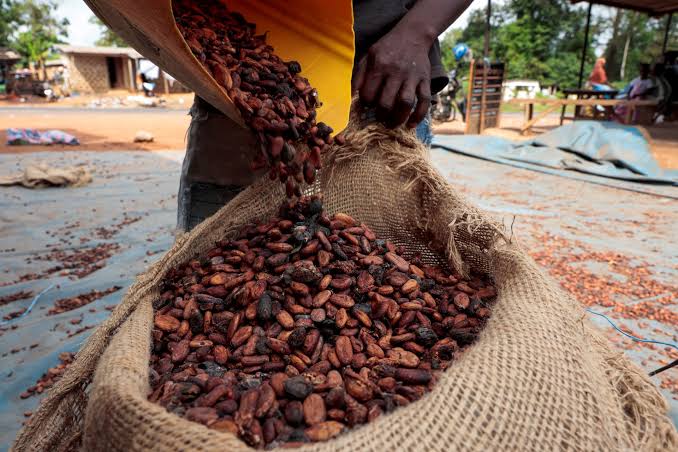
ABIDJAN, November 13 (Radarr Africa) – An exceptionally strong El Niño could cut Côte d’Ivoire’s 2026/27 cocoa output by 21 to 25 per cent, according to a note from the country’s national weather agency, SODEXAM, that was seen by Reuters and AFP this week.
Côte d’Ivoire is the world’s top cocoa producer. It supplies about 40 per cent of global output, and the sector accounts for about 15 per cent of national gross domestic product and supports roughly five million people, directly and indirectly, according to AFP’s account of the note.
The note, written by SODEXAM’s National Meteorology Directorate and partly intended for the Ivorian government, calls the event the “Super El Niño 2026-2027” and describes it as structurally severe. Its peak is expected through December, and it could last until April or May 2027.
SODEXAM expects annual rainfall to fall by 10 to 27 per cent, with a shorter rainy season, a longer dry season and higher temperatures. Planting calendars could be disrupted, and water reservoirs and hydroelectric dams could come under strain. A water deficit combined with high heat could cause wilting and premature drop of young pods, flower abortion and loss of leaves on trees, which the agency says would reduce output by 21 to 25 per cent.
The note recommends planting drought-resistant crop varieties, developing supplementary irrigation systems and promoting agroforestry on cocoa plantations. AFP describes the expected loss of income for planters as colossal and says state export revenue would also fall.
The warning comes as early arrivals at ports are already weak. A director of a European cocoa export company based in Abidjan, who was not named, told Reuters that arrivals are below all initial forecasts. Production “isn’t late; it’s actually down,” he said, and he questioned whether a 25 per cent drop might still be too optimistic.
Farmers describe the same picture. Simplice Koua, who farms six hectares in Duekoue, told Reuters that by this time last year he had sold 14 bags of 80 kilogrammes each, and this year he has sold three. He had expected a late crop to pick up in November, he said, but “production hasn’t moved.”
In June, Côte d’Ivoire decided to temporarily halt sales of export contracts for its 2026/27 main crop. It had sold about 1.15 million tonnes and was waiting for a clearer estimate of the harvest. Exporters say the country harvested more than 2 million tonnes last season.
The African Development Bank told Reuters in July that El Niño will probably cut economic output in heavily affected African countries by 1 to 2 per cent on average, with a combined hit of $10 billion to $20 billion across the continent.
AFP also cited the European Union’s Copernicus observatory, which found October 2026 was the hottest October on record globally, with average air temperature 1.75 degrees Celsius above the pre-industrial level. An AFP analysis of Copernicus data found that 33 countries set heat records in October.
