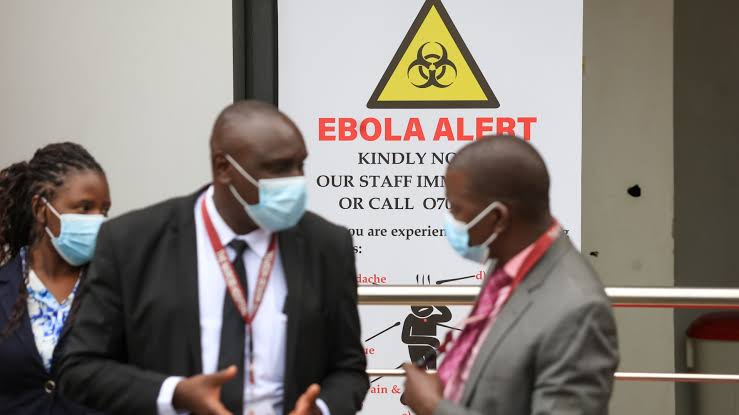
Nigeria’s confirmation of an Ebola case in the Federal Capital Territory (FCT) has sparked concerns among business owners over possible disruptions to travel, cross-border trade, investment and commercial activities as health authorities work to prevent further transmission.
Health Minister Muhammad Ali Pate confirmed the case on Tuesday, October 20, 2026. The patient is a woman who recently arrived in Nigeria on an international flight from Uganda and is currently receiving medical care in isolation at a private hospital in the FCT.
Authorities have begun contact tracing and identified 44 close contacts, including healthcare workers, patients, caregivers and people linked to the patient’s travel.
“The FG calls on all public and private healthcare facilities nationwide to be on high alert. Healthcare workers must maintain a high index of suspicion, promptly identify and isolate suspected cases, observe strict infection prevention and control measures, and immediately report suspected cases to public health authorities,” the minister noted.
The announcement has heightened anxiety among businesses concerned that the outbreak could affect customer confidence, international travel and Nigeria’s commercial relationships if the infection spreads.
Businesses Worry About Trade and Investment
Muda Yusuf, founder and chief executive officer of the Centre for the Promotion of Private Enterprise (CPPE), described the development as troubling, warning that an outbreak that is not contained could damage investor confidence and Nigeria’s relationships with international business partners.
“If it is not contained, it will affect mobility, it will affect cross-border businesses, it will harm our relationship with international partners. It will affect investment, as people who want to come into the country would think twice before coming,” Yusuf told BusinessDay.
He explained that uncertainty over public safety could discourage foreign visitors and investors, potentially reducing commercial activity and weakening business partnerships.
Technology analyst Jide Awe also warned that the outbreak could affect economic activity and business confidence if transmission extends beyond the initial case.
The concerns reflect the potential economic consequences of public health emergencies, particularly in an economy that depends on international trade, investment and the movement of people.
Lessons From Nigeria’s 2014 Ebola Outbreak
Nigeria’s latest case has revived memories of the 2014 Ebola outbreak, when public anxiety affected commercial activities even as health authorities worked to contain the disease.
A World Bank report published on October 8, 2014, estimated that some shopping centres and commercial businesses in Lagos experienced demand declines of between 20 and 40 per cent during that period.
The report, The Economic Impact of the 2014 Ebola Epidemic: Short- and Medium-Term Estimates for West Africa, examined how fear, reduced consumer spending, travel restrictions and higher operating costs affected economic activity.
Nigeria recorded 20 confirmed and probable cases and eight deaths during the 2014 outbreak. The World Health Organisation declared the country Ebola-free on October 20, 2014, after health authorities monitored 894 contacts without identifying further cases.
The government spent approximately $13 million on its direct response to the outbreak, according to the World Bank report. Effective coordination among federal and state authorities, supported by international partners, helped Nigeria contain the disease.
The experience demonstrated that a public health emergency can disrupt businesses even when the number of infections remains limited. It also highlighted the importance of rapid diagnosis, contact tracing, clear public communication and coordination between relevant agencies.
Experts Call for Swift Containment Measures
Yusuf warned that a prolonged outbreak could increase healthcare expenditure, interrupt business travel and discourage international visitors and investors.
Awe called for prompt contact tracing, timely laboratory testing, protection for healthcare workers and stronger infection prevention measures in hospitals and other healthcare facilities.
He also stressed the need for clear and consistent communication to counter misinformation and prevent unnecessary public panic.
Coordination among airlines, border health authorities and neighbouring countries will be important in identifying potential exposures associated with international travel. Awe noted that any travel or border restrictions should be guided by public health evidence while avoiding unnecessary disruption to legitimate trade.
He further emphasised the importance of maintaining routine medical services, including maternal and child healthcare, while implementing emergency response measures.
Nigeria’s Response Will Shape Economic Impact
Nigeria’s experience in 2014 showed that effective containment could limit the duration of an outbreak and help restore public confidence. The immediate priorities in the current situation include monitoring identified contacts, preventing further transmission and providing accurate information to the public.
Although the confirmed case has raised concerns among businesses, one infection does not necessarily indicate a widespread outbreak.
The speed and effectiveness of the government’s response will be crucial in determining whether the incident remains contained or develops into a broader public health and economic challenge.
For businesses and investors, clear communication and effective disease control will be essential to maintaining confidence and limiting potential disruptions to trade, travel and commercial activities.
