Buying and selling phones is a major part of Nigeria’s retail market, from large electronics stores to small shops selling new and used devices. But for phone dealers, a device’s selling price and condition may no longer be the only things to check before it reaches a customer.
The Nigerian Communications Commission (NCC) is strengthening compliance checks for SIM-enabled devices, requiring businesses in the supply chain to meet applicable approval and verification requirements. The changes could affect how importers, distributors and retailers manage their stock and prepare devices for sale.
In October 2026, the commission reminded manufacturers, importers, distributors and retailers of their obligations under Nigeria’s communications laws and regulations. Devices that fail to meet applicable requirements may face restrictions from accessing Nigerian mobile networks.
For businesses operating on tight margins, the important question is what compliance involves and how dealers can avoid problems with the phones they sell.
What Is the NCC Checking?
The NCC’s framework involves two related but separate processes: Type Approval and device verification.
Type Approval confirms that a device model meets the applicable technical standards. Device verification checks individual devices using their International Mobile Equipment Identity (IMEI), a unique identifier associated with a mobile device.
The distinction matters because approval of a phone model is not the same as verification of every individual device supplied for sale.
According to the NCC, businesses responsible for importing, distributing or selling applicable SIM-enabled devices must ensure that the relevant requirements are met. The framework covers more than smartphones; it can also apply to cellular tablets, modems, SIM-enabled point-of-sale terminals and other devices that connect to Nigerian mobile networks.
What Does This Mean for Phone Dealers?
For retailers, compliance starts with knowing where their stock comes from. Dealers need to work with suppliers to confirm that devices meet the applicable approval and verification requirements.
They may also need to maintain purchase invoices, inventory records and other documents showing the source and status of their stock. Businesses importing devices directly have additional responsibilities under the relevant rules.
The NCC has also outlined licensing requirements for businesses involved in selling or installing telecommunications equipment. The applicable licence depends on the nature of the business, so dealers should confirm the category that applies to their operations with the commission.
These requirements make supplier checks and record-keeping important parts of running a phone business, alongside pricing, repairs and customer service.
Could Compliance Increase Business Costs?
Meeting regulatory requirements may require dealers to spend time checking stock, organising records, contacting suppliers and resolving verification problems. Importers and larger distributors may also need systems for handling device information in bulk.
However, the actual financial burden on small retailers is not yet clear. It would be premature to claim that the rules will necessarily increase phone prices or force businesses to close without evidence from affected dealers.
The impact may differ between a small shop buying from an established local distributor and a business importing devices directly into Nigeria.
That difference is worth investigating because smaller dealers may have fewer administrative resources, while importers may be responsible for more stages of the compliance process.
What Should Buyers Know?
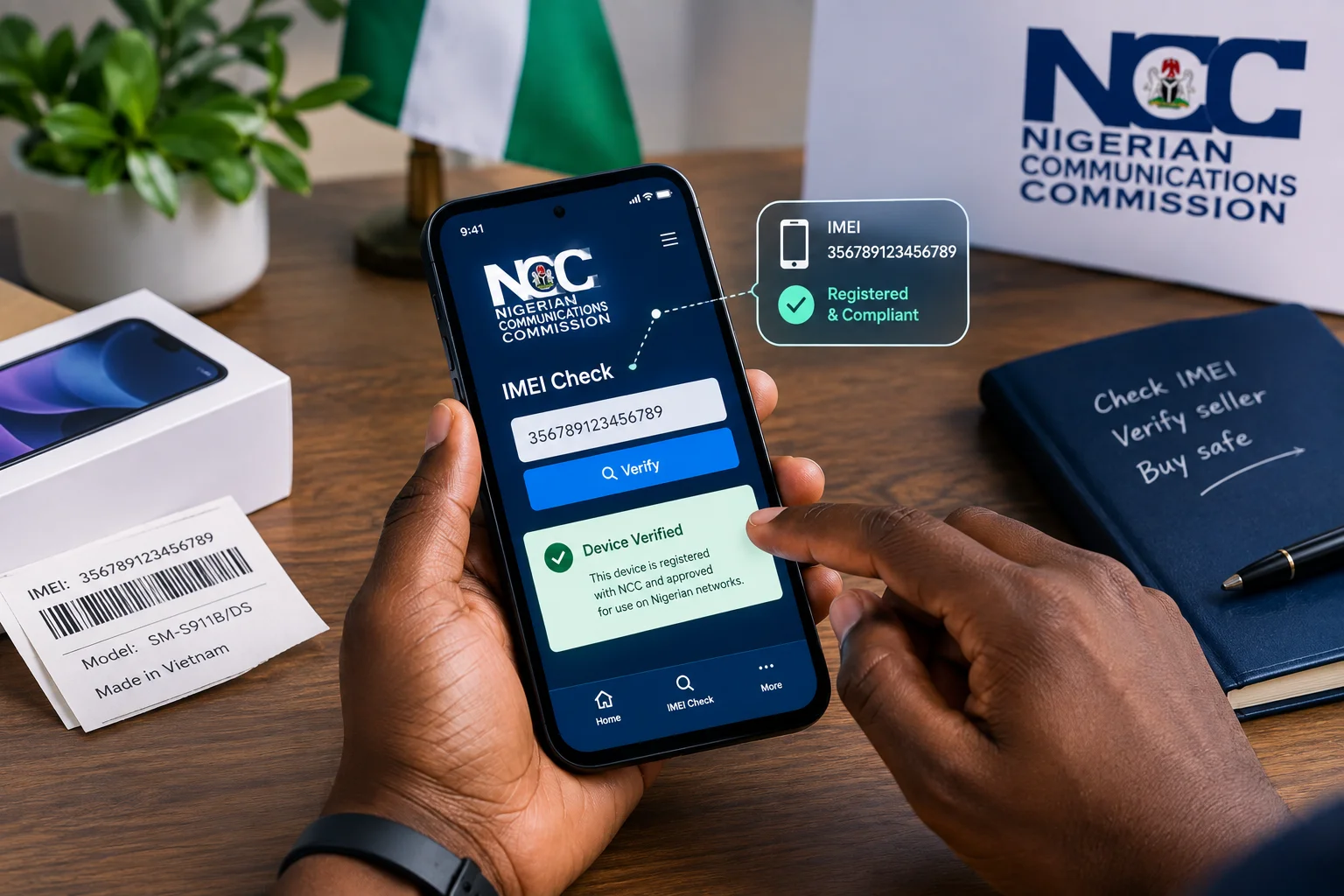
Consumers can also take a practical step before buying a phone: check its status through the NCC’s official Device Checker.
The commission says buyers can dial *315# or use its official Device Checker page to follow the verification process.
An unsuccessful check does not automatically prove that a device is counterfeit. Buyers should ask the seller to clarify the result and resolve any outstanding issue before completing the purchase.
The NCC has also said that phones already connected to Nigerian networks before the new system took effect on October 7, 2026, were automatically verified. Consumers who already own phones bought locally do not generally need to undertake a new verification themselves unless they encounter a specific restriction or are instructed otherwise.
A Compliance Test for the Phone Market
The NCC says the strengthened process is intended to improve oversight, protect consumers and create fairer competition for businesses that comply with the rules.
Whether it achieves those goals will depend partly on how clearly the requirements are communicated, how consistently they are enforced and how easily legitimate businesses can resolve verification problems.
For phone dealers, the immediate priority is to understand their obligations, verify their suppliers and maintain proper stock records. For consumers, checking a device before paying can provide an additional safeguard.
As enforcement develops, the key business question is whether the system can reduce the circulation of non-compliant devices without imposing unnecessary uncertainty on legitimate sellers.
