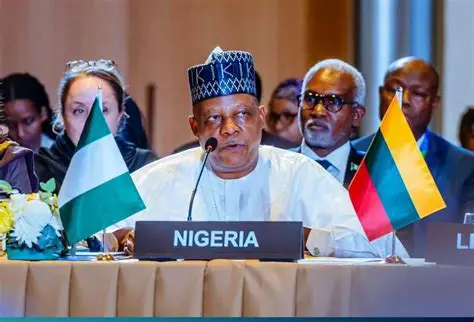
Nigeria’s renewed campaign for a permanent seat on the United Nations Security Council is facing a major challenge within Africa, as the continent seeks at least two permanent seats and has yet to decide which countries should occupy them.
Vice President Kashim Shettima is scheduled to present Nigeria’s national statement at the 81st United Nations General Assembly in New York on Thursday, September 24. Reform of international institutions, peace and security, and a more equitable global economic order are expected to feature prominently in his address.
The campaign comes amid growing calls for changes to the structure of the Security Council, which continues to reflect the global power balance established after World War II.
However, Africa’s demand is not centred on Nigeria alone.
Under the African Union’s common position, the continent is seeking at least two permanent seats with the same privileges as existing permanent members, including veto rights if the veto is retained. It is also seeking five additional non-permanent seats.
The AU position leaves the selection of Africa’s representatives to the continent, creating another layer of competition for Nigeria.
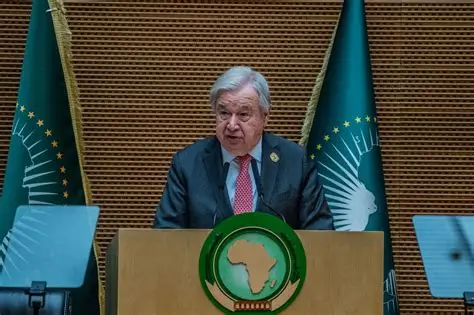
Abuja must persuade the wider international community that Africa deserves greater representation while also convincing African countries that Nigeria should occupy one of the permanent positions.
Nigeria, South Africa and Egypt make competing claims
Nigeria has served on the Security Council five times, the same number as Egypt and more than South Africa’s three terms. The country also has a long history of UN and regional peacekeeping and remains one of Africa’s largest demographic and economic powers.
South Africa’s position is strongly linked to its multilateral diplomacy and role in the Global South, while Egypt’s strategic influence extends across North Africa, the Arab world and the Middle East.
All three countries therefore bring different diplomatic and strategic credentials to the discussion.
However, the AU has not selected any one of them as Africa’s permanent representative.
Katchy Ononuju, a public affairs analyst and director of the Heritage Centre, Abuja, said Nigeria faces competition from countries including South Africa and Egypt, which would not easily yield ground to Abuja.
This makes diplomatic coalition-building an important part of Nigeria’s campaign.
Veto power remains a key issue
The UN Security Council currently has 15 members, comprising five permanent members — China, France, Russia, the United Kingdom and the United States — and 10 elected members.
The five permanent members have veto power, making any expansion of the Council a potential redistribution of political influence.
A UN negotiating document shows that countries remain divided over whether new permanent members should receive veto rights, whether the veto should be restricted or abolished, or whether another arrangement should be adopted.
Nigeria supports the African position that any new permanent members should have veto powers for as long as the existing permanent members retain theirs.
A permanent seat without veto power would increase African representation but would leave the existing balance of power largely unchanged.
Nigeria’s domestic challenges also feature
Nigeria’s international ambitions come as the country continues to deal with security challenges while working to strengthen its economy and attract investment.
Abubakar Kari, an associate professor of sociology and Dean of Students Affairs at the University of Abuja, said Nigeria’s contribution to global peace and its position in Africa gave it a strong case.
However, he said Abuja would need to strengthen its diplomatic lobbying capacity.
“International politics is about what you can give,” Kari said, arguing that Nigeria’s security and economic challenges could weaken its ability to build support for the campaign.
Aliyu Idi Hong, a former foreign affairs minister of state, also said Nigeria’s demographic position, peacekeeping record and role in strengthening democracy in West Africa support its case for greater representation.
He nevertheless urged the government to strengthen its diplomatic machinery, saying Nigeria cannot assume its historical role will automatically translate into international support.
What a permanent seat could mean for Nigeria
A permanent Security Council seat would give Nigeria a continuing role in decisions concerning international conflicts, sanctions, peacekeeping mandates and other global security matters.
It could also strengthen Abuja’s diplomatic leverage as it seeks a larger role in international affairs.
However, permanent membership would come with greater responsibilities. Nigeria would need the diplomatic capacity to maintain positions on conflicts involving major powers and strategic partners.
It would also have to balance its national interests with expectations that an African permanent member should advance broader continental priorities.
Nigeria’s Security Council experience, demographic weight, regional role and peacekeeping history provide important credentials for its campaign. However, the competition within Africa remains unresolved.
The African Union wants at least two permanent seats, while Nigeria, South Africa and Egypt have different claims to greater representation.
Nigeria therefore faces two separate diplomatic tasks: securing support for Africa’s permanent representation at the Security Council and building enough African backing for Nigeria to occupy one of those seats.
