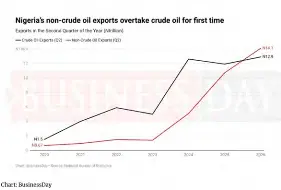
Nigeria non-crude exports overtook crude oil for the first time in comparable official data in the second quarter of 2026, reaching ₦14.11 trillion against ₦12.91 trillion for crude, according to National Bureau of Statistics (NBS) figures reported by BusinessDay and the Rio Times.
What happened
Merchandise exports reached ₦27.02 trillion, about $20.3 billion, in the second quarter, up 18.77%. Crude oil brought in ₦12.91 trillion, or 47.79% of the total, while non-crude exports made up the remaining 52% or so.
India was the top destination, taking ₦3.29 trillion of Nigerian goods, mostly non-crude products such as refined fuels. Spain, the Netherlands, the United States and Togo followed, with exports to the United States at ₦1.73 trillion.
On the import side, China supplied 41.02% of everything Nigeria bought abroad, worth ₦5.92 trillion. The United States was second at ₦1.01 trillion. The overall trade surplus doubled to ₦12.6 trillion.
Why it matters
The shift suggests Nigeria is earning more from goods other than raw crude. Part of that is a refining story. The US Energy Information Administration says seaborne petroleum product shipments from Nigeria averaged 561,000 barrels per day in the second quarter of 2026, compared with 79,000 in 2023, underpinned by the Dangote refinery. Imports of refined products fell and exports rose as Nigeria became more self-sufficient in fuels. So some of the growth in non-crude exports reflects refined fuels rather than a broad base of new products.
Oil still matters for dollar earnings. Crude output averaged 1.72 million barrels per day in the second quarter, up from 1.68 million, the NBS said, even though oil made up just 4.16% of real output. That gap between oil’s small share of the economy and its large share of export income is one reason policymakers want to diversify further.
What to watch
Third-quarter trade data will show whether non-crude exports keep their lead, especially as the Dangote refinery’s planned expansion would add to refined product volumes. China’s dominance on the import side, at more than 41%, is another number to follow, as is the size of the trade surplus once global oil prices move.
Related on Radarr:
- Nigeria Loses N3.18tn in Crude Oil Export Earnings Despite Higher Output
- Nigeria Expects Higher Oil Output From New Oil Blocks
- Deutsche Bank Bets on Naira as Nigeria Attracts Investors
Sources: Rio Times, citing the NBS and BusinessDay; US Energy Information Administration.
