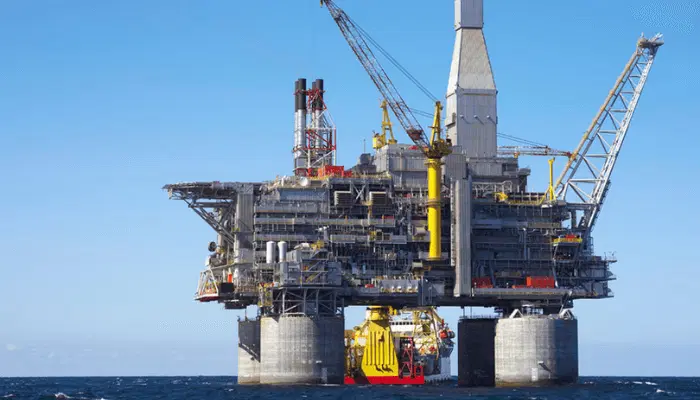
LAGOS, November 20 (Radarr Africa) – The number of active oil rigs in Nigeria fell 5 per cent to 19 in October 2026 from 20 in September, according to the Organisation of the Petroleum Exporting Countries (OPEC), ending several months of gradual improvement in drilling activity.
The monthly count stood at 15 in January and February, rose to 17 in March and dropped to 12 in April. It recovered to 17 in May, 18 in June and July, and 20 in both August and September before October’s decline. The recovery has been uneven, although the October count remains above the 15 rigs recorded in January.
Rig counts are closely watched because they show upstream investment and future production capacity, as well as demand for drilling contractors and service firms. Industry stakeholders cite investment uncertainty, high operating costs, infrastructure constraints and security concerns as the main obstacles.
Output figures from the Nigerian Upstream Petroleum Regulatory Commission (NUPRC) show crude oil and condensate production averaged 1.68 million barrels per day in October, down from 1.71 million in September. Crude oil alone averaged 1.51 million barrels per day, or 101 per cent of the 1.5 million barrels per day quota set by OPEC, the sixth consecutive month in which Nigeria met its quota.
Wole Ogunsanya, chairman of the Petroleum Technology Association of Nigeria (PETAN), said the country lacks enough investment in the equipment and infrastructure needed to close the gap between current output and its ambitions. He said PETAN’s assessment found that about $6 billion would be required for drilling equipment alone to support a drive towards three million barrels of crude oil per day.
Ogunsanya described the funding need as both a challenge and an opportunity for Nigerian service firms, particularly as indigenous producers take over assets previously run by international oil companies. He said conventional lending has made it hard for indigenous firms to buy expensive rigs despite their technical capacity.
Aisha Mohammed, a senior energy analyst at the Centre for Development Studies, said, “A slowdown can therefore affect revenue across the wider petroleum services industry.” She noted that drilling campaigns generate contracts for rig operators, equipment suppliers and engineering firms.
The NUPRC has been pushing initiatives to increase production, accelerate field development and attract investment.
In offshore drilling, TotalEnergies has spudded the Akpo Far East B exploration well using the Noble BlackRhino drillship. TotalEnergies and its partner Meren describe it as Nigeria’s first deep offshore exploration well in a decade and the start of a drilling campaign in licence PML 2/3.
The well is about five kilometres from existing Akpo field infrastructure, which offers a potential low-cost, short-cycle tieback if it succeeds. Meren has said first production could be achievable in 2027.
Matthieu Bouyer, managing director of TotalEnergies EP Nigeria and country chair, said the plan after this well is to drill “other exploration and appraisal wells on Egina South and PPL 2000/2001”. TotalEnergies entered those blocks less than two years ago.
Meren expects a second drilling rig to arrive in the first quarter of 2027 for its campaign on PML 52 and PPL 2003.
Terminal data from the NUPRC show Forcados led October output at 318.49 thousand barrels per day, followed by Bonny at 311.02 thousand, Qua Iboe at 173.97 thousand and Escravos at 134.67 thousand. Bonga produced 106.65 thousand barrels per day. The regulator’s highest single-day output in October was 1.79 million barrels and the lowest was 1.60 million.
