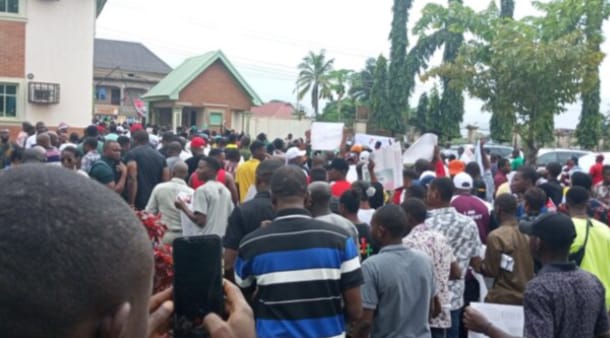
Public servants across Nigeria have commenced a three-day warning strike over the Federal Government’s failure to address demands for lower petrol prices and measures to ease the rising cost of living.
The industrial action, organised by the Joint National Public Service Negotiating Council (JNPSNC), began at midnight on Friday, October 2, 2026, and is scheduled to run until Sunday, October 4. It affects workers across federal, state and local government services, including ministries, departments and agencies. (Businessday NG)
The council had given the Federal Government until September 30 to respond to its demands. After the deadline passed without the requested measures, the JNPSNC directed its affiliated unions to mobilise workers for the strike.
The council had also expected President Bola Tinubu to address the concerns in his Independence Day broadcast on October 1. However, the speech did not announce a reduction in petrol prices or the wage measures demanded by the workers. (Vanguard News)
Workers demand ₦500 petrol
One of the council’s main demands is for the Federal Government to reduce the price of petrol to ₦500 per litre.
The JNPSNC argued that high petrol prices have increased transportation costs and placed additional financial pressure on workers and their families.
The council said petrol prices currently range from about ₦1,450 to ₦2,000 per litre in many locations, with some areas recording prices as high as ₦2,500.
“The current price of PMS, ranging from N1,450 to N2,000 and, in some locations outside major communities and cities, as high as N2,500 per liter, is unacceptable to Nigerian workers,” the council said.
It also proposed the creation of an intervention fund to address landing costs and support oil and gas operators.
The workers further called on the government to ensure that crude oil is supplied to the Dangote Refinery and modular refinery operators on appropriate terms to support increased domestic refining and potentially reduce the cost of petroleum products.
Demand for wage award
The public servants also want the Federal Government to approve an immediate wage award to help workers cope with rising living costs.
“The Federal Government should urgently approve a wage award for Nigerian workers to cushion the effects of the prevailing harsh economic conditions being experienced by workers, their dependents, and vulnerable Nigerians,” the council said.
The council argued that such a measure would provide temporary relief while allowing public servants to continue meeting their responsibilities.
New minimum wage talks
Another key demand is the establishment of a tripartite committee to begin negotiations for a new national minimum wage ahead of the next review expected in 2027.
The JNPSNC said early negotiations would help prevent delays in reaching and implementing a new wage agreement.
The council had warned that failure to address the demands by September 30 would trigger the three-day warning strike.
Strike affects government services
The JNPSNC instructed workers across the three tiers of government to participate in the industrial action.
The council comprises several public-sector unions, including the Nigerian Civil Service Union, Medical and Health Workers Union, Association of Senior Civil Servants of Nigeria and National Association of Nigerian Nurses and Midwives. (Vanguard News)
The action comes amid wider concerns over the rising cost of living and the purchasing power of Nigerian workers.
The Nigeria Labour Congress has separately criticised the erosion of workers’ incomes, arguing that the ₦70,000 minimum wage has been overtaken by increases in the cost of food, transportation, housing and other essentials. (The Guardian Nigeria)
For the JNPSNC, the three-day action is intended to press the government to respond to its demands on petrol prices, wage support and the next minimum wage negotiations.
The warning strike is scheduled to end on October 4, after which the council may review its next steps based on the government’s response.
Read also on Radarr: Wike Denies Owing N5.2bn, Blames Civil Servants for Illegal Contracts | Lagos Declares August 20 Public Holiday for Isese Day
