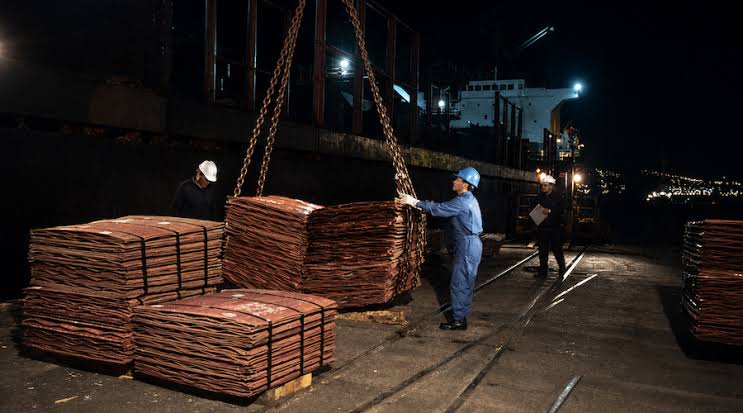
Commodity trader Mercuria has delivered 12,000 tonnes of copper from the Democratic Republic of Congo (DRC) to Project Vault, the US government’s new critical minerals reserve, in one of the clearest signs yet of how Washington is tapping African supply to reduce its reliance on China.
Mercuria’s global head of metals, Kostas Bintas, disclosed the delivery at the FT Metals and Mining Summit on Thursday, Reuters reported via CNBC Africa.
What happened
Project Vault was announced by President Donald Trump in February as a strategic stockpile of critical minerals. Its aim is to ease supply shortages for American manufacturers that depend heavily on Chinese materials. The plan combines $2 billion in private funding with a $10 billion loan from the US Export-Import Bank.
Mercuria is an anchor investor in the project and announced a $500 million commitment in September. The copper delivered this week forms part of a wider Congolese commitment to supply the US market.
That commitment took shape earlier this year. In January, Congo’s state miner Gécamines said it would ship 100,000 tonnes of copper in 2026 from its 20% share of output at the Tenke Fungurume mine, which is operated by China’s CMOC Group, MiningMX reported at the time. Its trading arm, Gécamines Trading, buys the metal and markets it to American buyers, with Mercuria providing finance, logistics and technical support.
Why it matters
The DRC is the world’s second-largest copper producer and holds the largest cobalt reserves, making it central to the global supply of metals used in electric vehicles, power grids, electronics and defence equipment. Yet Chinese companies dominate much of the country’s copper and cobalt mining and refining.
The US has been trying to change that balance. Under a strategic agreement reached with Washington in January, the DRC granted the US access to mining and infrastructure projects, while the US is supporting efforts to end the insurgency in the country’s east. Gécamines has said it eventually wants to market up to 500,000 tonnes of copper and 40,000 tonnes of cobalt a year, and the US International Development Finance Corporation has signed a preliminary deal to explore taking an equity stake.
For Congo, closer ties with American buyers could bring more competition for its minerals, new sources of finance and greater bargaining power. Gécamines’ move to sell its own share of output, rather than leaving marketing to foreign partners, also gives the state more control over where its copper goes and on what terms. Radarr has reported on how the DRC is tightening control of mining data to capture more value from its resources.
The trade gap remains wide, however. China traded about $28 billion with Congo in 2024, compared with about $1.6 billion for the US, so a few shipments will not quickly reshape the market.
What to watch
Key questions include how much more Congolese copper will flow to Project Vault before the end of the year, whether the DFC equity stake in Gécamines’ trading business is finalised, and how China and its companies respond to growing US involvement.
Other African producers will also be watching. Countries such as Zambia, which shares the Central African Copperbelt with the DRC, could see more interest from US buyers and financiers if Project Vault expands its sourcing across the region.
