TRIPOLI, November 27 (Radarr Africa) – Libya needs at least $20bn of investment to raise oil production from 1.4 million barrels per day (bpd) to 2 million bpd, the chairman of the National Oil Corporation (NOC), Masoud Suleiman, said on the sidelines of the Libya Energy Show (LIBYES) 2026 in Tripoli.
The show ran from November 24 to 26 at the Tripoli International Fairgrounds. Suleiman said investment would come in phases, based on feasibility studies, technical assessments and global price trends, and that Libya has significant onshore, offshore and unconventional potential.
Five international companies have secured five exploration blocks, with seismic surveys and drilling due to start in early 2027. Investment is also on offer for discovered but undeveloped fields. The NOC is amending its exploration and production-sharing agreements to attract foreign investors and has adopted a new participation model to match shifts in global markets.
In his opening address, Suleiman said a public bidding round for discovered, undeveloped and marginal oil fields will launch in 2027, followed by a public exploration bidding round in early 2028.
The NOC aims to raise output at Waha Oil Company to 650,000 bpd by developing North Jalo, Jalo 3, Dahra and other fields. It also sees opportunities to increase production at Harouge, the Arabian Gulf Oil Company and Mellitah Oil & Gas.
On refining, development work on Libyan refineries starts in 2027. The Ras Lanuf refinery is due to resume in the second half of 2027 after maintenance and should cover about 50% of the country’s diesel needs. The Zawia refinery is being developed to cover more than 65% of gasoline needs. The stated aim is to meet more than 85% of actual domestic fuel demand by 2030, which the NOC expects to cut the fuel import bill and improve supply stability.
Suleiman said the inflated import bill comes from fuel leaking out of official distribution channels rather than from real consumption. He said the NOC is a technical body and that fighting smuggling and monitoring borders fall to the relevant authorities.
The NOC signed a package of agreements at the show. It signed with the global consultancy KBR to develop a plan to increase production, and with K2 for monitoring, auditing and a gap analysis of its financial systems.
Solar Turbines and Masalla Oil Services signed a strategic partnership aimed at operational efficiency, technical capability and the exchange of expertise. The NOC also signed a memorandum of understanding with Honeywell covering technical training, development and the move to advanced industrial systems, and a separate memorandum with Baker Hughes covering strategic training and a development plan.
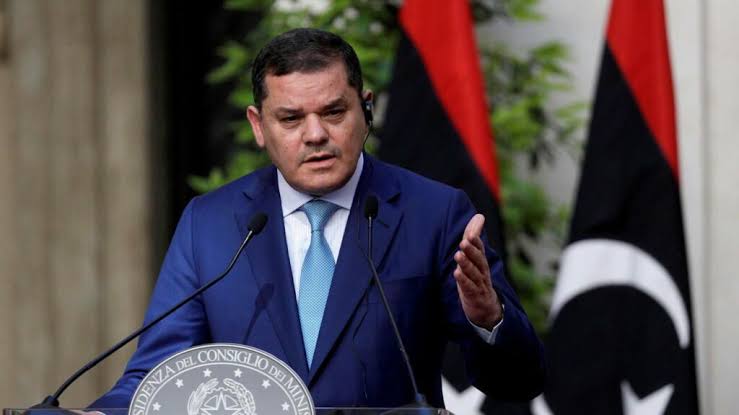
Baker Hughes opened its new Tripoli office the same day. Attendees on the first day included Tripoli-based Prime Minister Abdel Hamid Aldabaiba, the governor of the Central Bank of Libya, the head of the Administrative Control Authority and the president of the African Petroleum Producers’ Organisation, along with ministers, the NOC board and executives from major international energy companies.
On November 24, the Libyan Investment Authority (LIA), OQ Exploration and Production, part of Oman’s OQ group, and the NOC signed an energy cooperation agreement at the show. It implements a memorandum of understanding that the LIA and OQ signed earlier in 2026.
The LIA said the agreement starts preliminary legal steps to explore oil and gas investment in partnership with the NOC. It sets a framework for the three parties to share expertise and combine technical and investment capacity to support Libya’s economic development.
