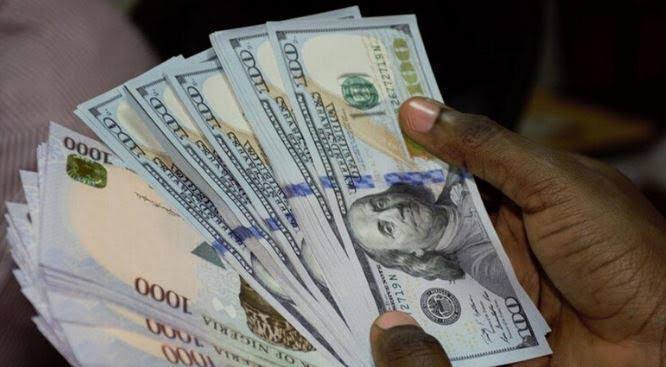
The Central Bank of Nigeria (CBN) recorded a sharp decline in its foreign exchange sales in the first half of 2026, as increased dollar inflows from private sources continued to support activity in the Nigerian foreign exchange market.
Figures from the CBN’s statistical bulletin show that the bank’s recorded forex sales dropped to $1.67 billion between January and June 2026, compared with $5.41 billion during the corresponding period in 2025.
The $3.73 billion decline represents the lowest level of recorded sales over the five-year period reviewed.
The reduction in the central bank’s dollar sales came alongside an increase in total foreign exchange inflows, suggesting that private-sector participants are playing a larger role in supplying the market.
According to Adebowale Funmi, head of research at Parthian Securities, total foreign exchange inflows increased by 12.7 percent to $63.82 billion in the first half of 2026. Autonomous sources contributed $45.5 billion to the total.
Private-sector inflows support dollar liquidity
Market analysts say the fall in the CBN’s direct forex sales should not automatically be interpreted as a shortage of dollars.
Instead, they believe the development reflects a changing market structure in which private-sector inflows are increasingly meeting demand, reducing the need for frequent central bank intervention.
Ayodeji Ebo, chief executive officer of MDU Capital, said the decline indicates that the CBN is becoming less reliant on direct dollar sales as private inflows improve.
“In my view, relative exchange-rate stability has reduced speculative dollar demand and improved confidence,” Ebo said.
He explained that attractive returns on naira investments, alongside improving investor confidence, have encouraged foreign portfolio investors to move funds into naira-denominated fixed-income assets. These conditions have also made some dollar holders more willing to exchange their foreign currency for naira investments.
Ebo added that recent reforms have improved transparency and participation in the forex market, allowing the CBN to concentrate on addressing liquidity shortages and preventing excessive exchange-rate fluctuations.
For businesses, he said sustained currency stability could make financial planning easier and reduce uncertainty around the cost of imported goods. Lower direct intervention could also help preserve the country’s external reserves.
However, he cautioned that foreign portfolio investments can be withdrawn quickly, making stronger export earnings, remittances and long-term investments important for maintaining the improvement.
Forex reforms reduce reliance on CBN intervention
Tunde Abidoye, head of research at Quest Merchant Bank, linked the decline in the CBN’s dollar sales to Nigeria’s gradual transition towards a more market-driven foreign exchange system.
He pointed to the liberalisation of the naira in June 2023 and subsequent policy changes intended to improve transparency and market operations.
According to Abidoye, these measures have strengthened price discovery, improved dollar liquidity and encouraged capital inflows by boosting investor confidence.
He noted that as market conditions improved and participants became more confident, the CBN increasingly focused its forex sales on occasional interventions to support orderly trading.
Abidoye also identified higher inflows from oil exports, supported by geopolitical tensions and elevated international oil prices, as another source of foreign exchange supply.
Funmi similarly attributed the lower intervention figures to the reforms introduced since 2023. She said the changes had improved investor confidence and encouraged more foreign exchange to enter through autonomous channels.
She warned, however, that the naira’s stability would increasingly depend on regular inflows from exports, remittances and foreign investment. This is particularly important as Nigeria’s gross external reserves remain above $50 billion.
Funmi stressed that reduced CBN sales do not necessarily mean the market is experiencing a dollar shortage. The more important question is whether private-sector inflows can consistently meet demand while the central bank remains able to intervene when necessary.
CBN dollar sales fluctuate over five years
Historical figures from the CBN show that its recorded foreign exchange sales have changed considerably since 2022.
Sales reached $7.74 billion in the first half of 2022 before falling to $7.08 billion in the same period of 2023. They declined further to $3.04 billion in 2024.
The figures recovered in 2025, rising by 77.7 percent to $5.41 billion, before dropping sharply to $1.67 billion in the first half of 2026.
The trend highlights the changing role of the central bank in Nigeria’s foreign exchange market and the growing importance of other sources of dollar supply.
Although reduced intervention could ease pressure on external reserves, analysts say the long-term outlook will depend on whether non-CBN sources can continue providing enough foreign currency.
Oil export earnings, diaspora remittances, foreign portfolio investments and other private inflows will therefore remain important to maintaining liquidity, particularly if global economic conditions change or investors reduce their exposure to naira assets.
