
The Dangote Group is pursuing a long-term strategy aimed at keeping more value within Nigeria by expanding domestic manufacturing and increasing exports of processed and refined products.
The approach forms part of the group’s broader 2030 vision, which focuses on reducing Nigeria’s dependence on imported goods while strengthening the country’s capacity to produce and export higher-value products.
Halima Dangote, group executive director for the Dangote Family Office and its international offices in Dubai and London, said the company is expanding beyond its traditional businesses in cement and sugar into areas including refined petroleum products and fertiliser.
“On our core products and everything that we do, but we are really ready to diversify, we are diversifying,” she said. “You can see from cement, sugar, salt. We’re doing refined products and fertiliser.”
She explained that the strategy is centred on processing raw materials locally before exporting them, allowing Nigeria to capture more economic value from its resources.
“If you look at it, we want to export value. That’s what we want to do,” Dangote said. “We don’t want to export food oil. We want to manufacture it and produce refined products. We don’t want to export limestone. We want to make cement. We don’t want to export anything that is not valuable. We have to refine it.”
The strategy is already reflected in the group’s investments across several sectors. Its cement operations have expanded domestic production, while its sugar, salt and fertiliser businesses are designed to strengthen local supply and reduce dependence on imports.
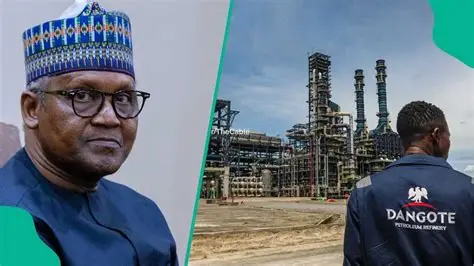
The Dangote Petroleum Refinery in Lagos is another major component of the strategy. The facility has begun changing Nigeria’s position in the petroleum market by increasing domestic refining capacity and creating opportunities for the country to export refined products.
The refinery, which has a production capacity of 650,000 barrels per day, produces petrol, diesel, aviation fuel, liquefied petroleum gas, polypropylene and other petroleum products.
Its operations are also expected to support Nigeria’s foreign-exchange position by reducing the need to import refined petroleum products and creating additional export earnings.
The group has indicated that the refinery will play a major role in its longer-term expansion plans, with production capacity expected to increase further as the company seeks to meet both domestic and international demand.
The strategy extends beyond petroleum. Dangote’s investments in fertiliser and petrochemicals are also intended to increase the amount of value generated from Nigerian raw materials before they reach international markets.
The company’s approach represents a broader shift from exporting commodities in their raw form towards producing finished or semi-finished goods that can command higher value in global markets.
Dangote said the philosophy should also extend to other sectors of the economy.
“Even if it is education, let’s have it here,” she said. “Then we can sort of feed the world.”
The 2030 vision therefore places greater emphasis on domestic production, industrial capacity and exports, with the aim of positioning Nigeria not only as a supplier of raw materials but also as a producer of finished goods for African and international markets.
The success of the strategy will depend on factors including infrastructure, energy supply, logistics, access to finance, policy stability and the ability of Nigerian companies to remain competitive in international markets.
For Dangote Group, however, the objective is clear: build more production capacity in Nigeria, process more resources locally and increase the share of value that remains within the country before products are exported.
