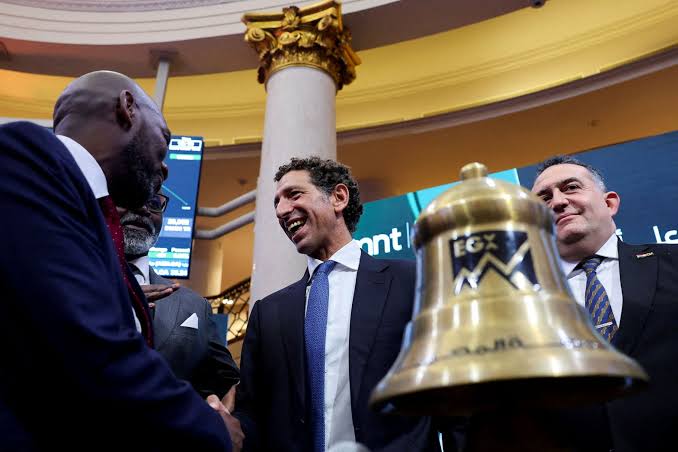
CAIRO, November 17 (Radarr Africa) – Three weeks after the Egyptian Exchange (EGX) halted trading for the first time in five years, analysts say the greater risk for a market dominated by retail investors is a long, flat stretch rather than another sharp one-day fall.
Trading was suspended for half an hour on October 25 after the EGX100 index fell 10%, the first market-wide halt since October 2021. Individuals accounted for 74.9% of open-market turnover in October and institutions for 25.1%, according to calculations based on exchange data, leaving the market heavily dependent on the confidence of small investors who have grown used to buying every dip.
EGX chairman Omar Radwan went on television that afternoon to describe the suspension as routine. “Some investors don’t know that investment is supposed to be long-term,” he said, urging investors to diversify and hold rather than sell in a hurry.
October trading showed retail and institutional investors moving in opposite directions. Individuals were net buyers of EGP 4.14bn of listed shares during the month, excluding block trades, while institutions were net sellers of the same amount. Foreign investors have been net sellers of EGP 13.5bn so far this year.
The benchmark EGX30 fell 4.43% in October, its first back-to-back monthly loss of 2026, while the EGX70 index of smaller companies dropped 9.91%. Korra Energi fell 19.93% in mid-October and at one point accounted for 12.7% of all equity trading in a single session.
Leverage made the sell-off worse. “Margin calls tend to concentrate in the sharpest sessions,” said Randa Hamed, managing director of Okaz Asset Management, adding that brokers closed positions once collateral ran out. Sameh Gharib of Tycoon Securities described a snowball effect, with falling prices eroding margin ratios and forcing leveraged holders to sell.
Hamed said investors have almost no way to protect themselves. Weekly derivatives turnover was below EGP 10m in late October, in a market worth EGP 3.9tn. The EGX secured its futures licence in January, launched index futures in March and added single-stock futures on CIB and TMG in June, while the Financial Regulatory Authority issued short-selling rules in August.
Himanshu Shrimali, co-founder and chief executive of Menthum, said the damage was smaller than many expected. “It’s not as bad as one would have imagined,” he said, describing October as a pause the market needed after a five-year run in which it returned about 60% in the year to September.
His concern lies with borrowing. In a Menthum poll, almost half of respondents said they had used buy-now-pay-later credit while investing in shares. Shrimali said borrowing at around 50% interest means investors need returns above that level just to break even.
Expectations remain high. In a follow-up Menthum poll, 23 of 47 respondents expected the EGX30 to gain 30% to 50% over the next 12 months, three expected more than 50%, and nine expected losses or a correction.
Shrimali warned that patience could wear thin if prices stall, saying that for many retail investors “even two months is longish enough”.
