By Radarr Africa Business Desk
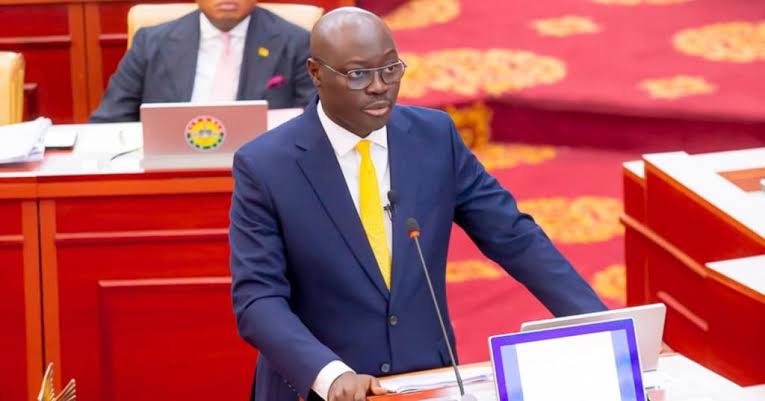
ACCRA, November 14 (Radarr Africa) – Ghana’s finance minister, Cassiel Ato Forson, presented a 2027 budget to Parliament on Thursday that projects total cash spending of GH¢389.2 billion, introduces no new taxes and launches a $10 billion four-year New Economy programme aimed at jobs and local processing of raw materials.
“This 2027 Budget will not introduce any new tax,” Forson told lawmakers, according to the budget speech coverage. The budget puts revenue and grants at GH¢323.4 billion and sets a cash deficit of GH¢65.8 billion, or 3.6 per cent of GDP, with a primary surplus of GH¢9.1 billion, or 0.5 per cent of GDP, press reports of the speech said. The government targets growth of at least 5.2 per cent in 2027, year-end inflation of 8 per cent, plus or minus 2 percentage points, and reserves covering at least six months of imports.
The New Economy programme, announced by President John Dramani Mahama, will invest $10 billion over 2027 to 2030, mainly financed domestically, with GH¢30 billion, about 1.5 per cent of GDP, allocated for 2027, according to the Ghana News Agency and press reports of the speech. By pillar, commercial agriculture is allocated $3 billion, energy $2.2 billion and critical minerals $1.5 billion. Tourism and creative arts, textiles and garments, and pharmaceuticals get $1 billion each, technology $300 million and nuclear readiness $200 million, press reports said. The government aims for growth of around 8 per cent and unemployment below 8 per cent by 2030, from about 12.8 per cent in 2025.
The budget sets deadlines for local value addition. Ghana, the world’s second-largest cocoa producer, plans to process all its cocoa locally by 2030, ban commercial rice imports by 2030, restrict raw manganese and bauxite exports by the end of 2030, and ban raw artisanal and small-scale gold exports by December 2028, press reports said. A new Cocoa Board Act before Parliament includes a mandatory local processing requirement, and a legislative instrument will set the timetable for moving from 50 per cent to 100 per cent domestic processing.
After presenting the budget, Forson told journalists that Nigerian businessman Aliko Dangote is in talks with the government about making Ghana a cocoa-processing hub under a proposed contract involving 500,000 metric tonnes of cocoa, according to a report of his November 12 interview. He said Dangote wants to use Ghana to process cocoa locally, that the terms are under review and that Dangote’s representatives want to sign a contract. Forson also said Ghana spends about $3.5 billion a year on food imports, including palm oil, sugar, rice and poultry, and wants to expand domestic production of maize, soybean and vegetables.
On energy, the budget allocates $2.2 billion, aiming to cut generation costs from 16 to 8 US cents per kilowatt-hour or less. The plan includes a 1,450 megawatt state thermal plant and a 600 megawatt solar facility with 2,000 megawatt-hours of battery storage, with emergency power plants phased out by 2030, press reports said. Nuclear readiness will receive $200 million over 24 months, with a plant contract targeted for December 2028. Solar panels and batteries are exempted from import duties and VAT.
Debt features prominently. The government will redeem early GH¢29 billion of domestic debt exchange programme bonds due in February 2027, and pay a $590 million Eurobond due on January 2, 2027, by December 31, together more than GH¢36 billion, according to press reports of the speech. “Your cash is ready. Come for your money!” Forson told bondholders, press reports said. About GH¢53 billion in those bond payments still falls due in February and August 2027. Public debt stood at GH¢759.3 billion, or 47.5 per cent of GDP, press reports said.
Forson reported a stronger 2026. Growth was 6.2 per cent in the first half against a 4.8 per cent target, inflation was 5.5 per cent in October, and gross reserves were $12.7 billion at the end of September, about 4.5 months of import cover, press reports said. The policy rate has been cut from 21.5 per cent to 14 per cent, and the 91-day Treasury bill rate fell from 11.09 per cent to 4.56 per cent. Ghana completed a $3 billion, three-year IMF programme and signed a new three-year Policy Coordination Instrument, the Ghana News Agency reported.
The shift away from austerity was flagged in July, when Forson said he would relax the adjustment by lowering the primary surplus target from 1.5 per cent of GDP to 0.5 per cent. Research bodies including ISSER and the Institute for Fiscal Studies credit macroeconomic gains mainly to spending restraint rather than stronger revenue and question the realism of targets and funding for flagship programmes, the Ghana News Agency reported.
