By Radarr Africa Business Desk
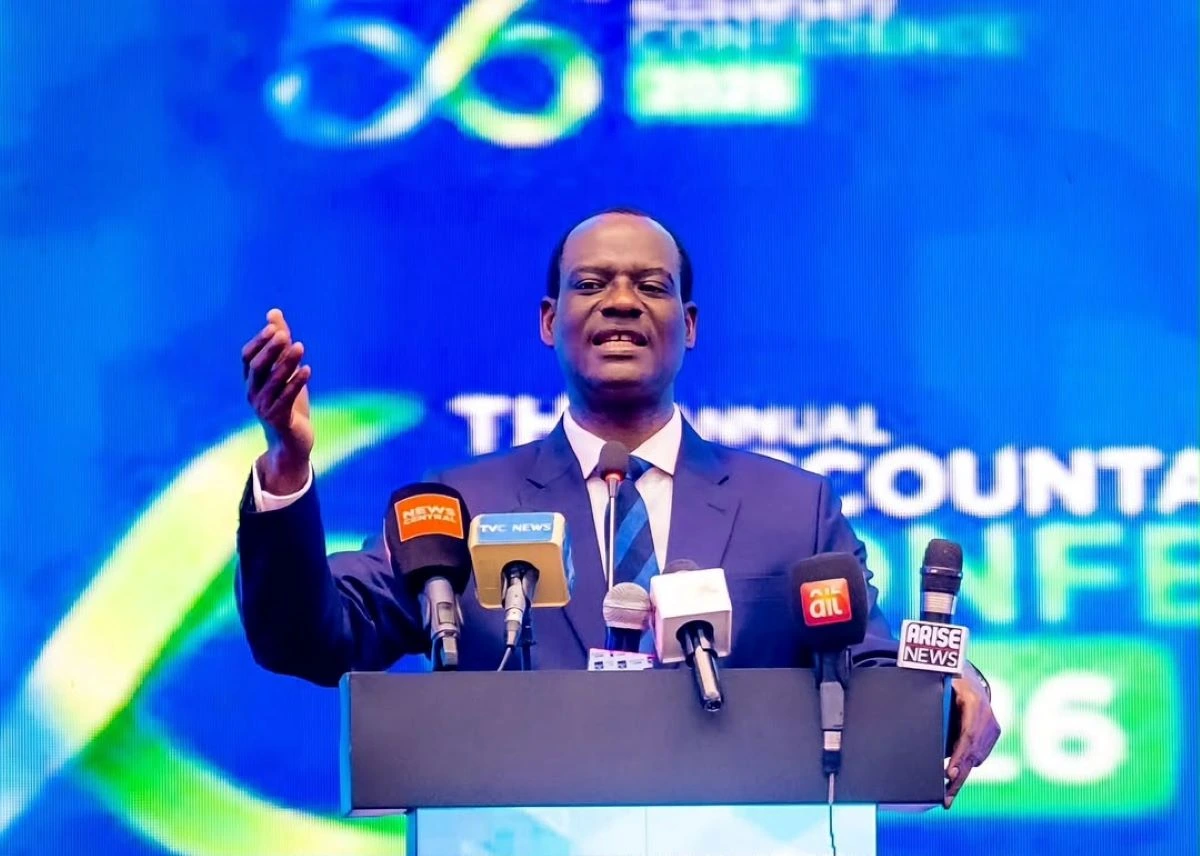
LAGOS, October 27 (Radarr Africa) – The Federal Government plans to bring inflation down to single digits before the end of 2027, Finance Minister Taiwo Oyedele said on Monday, arguing that cheaper credit is needed to lift investment and growth.
Oyedele spoke at the 32nd Nigerian Economic Summit in Abuja, organised by the Nigerian Economic Summit Group (NESG), according to BusinessDay and Nairametrics. He said Nigeria is growing at 4.43 per cent while businesses borrow at close to 30 per cent. “Imagine what is possible when you borrow at single-digit rates,” he said, as quoted by BusinessDay.
Headline inflation fell to 14.63 per cent in September from 15.39 per cent in August, Nairametrics reported, the fourth consecutive monthly decline this year. BusinessDay calculated that reaching a rate of 9.9 per cent would require a further drop of 4.73 percentage points from the September level. It added that the announcement did not set out a detailed sequence of measures or milestones.
Reuters, in a report carried by CNBC Africa, said the statement came months before a national election. It noted that President Bola Tinubu, in office since 2023, scrapped fuel subsidies and devalued the naira, steps that improved public finances, foreign reserves and investor confidence but also contributed to what the report called the country’s worst cost-of-living crisis in decades.
Oyedele told the summit that interest payments are the second-largest item in government spending, which he described as the price paid for stability, BusinessDay reported. He said savings from foreign exchange and fuel subsidy reforms had funded wage increases, pension arrears payments and subsidised credit for small businesses. He also urged Nigerians and companies to pay taxes in full and on time, arguing that tax defaults feed inflation, high interest rates and currency weakness.
The NESG-linked BusinessDay analysis put the spotlight on lending rates. It reported that the Central Bank of Nigeria cut its benchmark rate to 23 per cent in September, yet the average maximum lending rate rose to 32.62 per cent in September from 29.20 per cent in August. The average prime lending rate rose to 19.04 per cent from 17.86 per cent over the same period.
To show what the gap means for borrowers, the paper worked through a simple example: on a N100 million loan over one year, simple interest at 30 per cent is N30 million, against N10 million at 10 per cent, before fees. It cited the International Monetary Fund’s description of lending rates that rise quickly when policy tightens but fall slowly when it eases as “rockets and feathers”.

Economists at the summit urged caution on what lower inflation would mean for households. Faruq Quadri of SPEC-Matrix said that a slower rate of price increases does not mean prices themselves have fallen, so incomes must grow faster than inflation for purchasing power to recover, BusinessDay reported. Olugbenga Olaoye, an energy economist, pointed to Nigeria’s exposure to oil prices, noting that the country exports crude but still imports fuel, so higher prices raise both revenue and costs.
Other speakers focused on growth. Anambra State Governor Charles Soludo said growth of about 4 per cent is an improvement but that Nigeria needs sustained annual growth of 7 to 12 per cent over the next decade to cut poverty and expand jobs. “We must not take this moment for granted,” he said, according to BusinessDay. He also called for state fiscal policy to be aligned with federal goals and urged Nigerians to buy locally produced goods.
Chema Triki, co-founder and managing director of Growth Teams, told the summit that Nigeria ranks 141st out of 145 countries on the Economic Complexity Index, BusinessDay reported. She said more than 85 per cent of the country’s exports remain concentrated in crude oil and related products, and that Nigeria has added only nine new export products since 2007.
President Tinubu was represented at the opening of the summit by Vice President Kashim Shettima, Naija News reported. Tinubu said in a speech that his administration was pursuing reforms to correct years of underperformance, and that there is no shortcut to economic growth.
In an earlier Nairametrics report, Oyedele said single-digit inflation could save the government more than $10 billion. Nairametrics said Monday’s statement did not specify the measures or the timeline for taking inflation below its September level.
