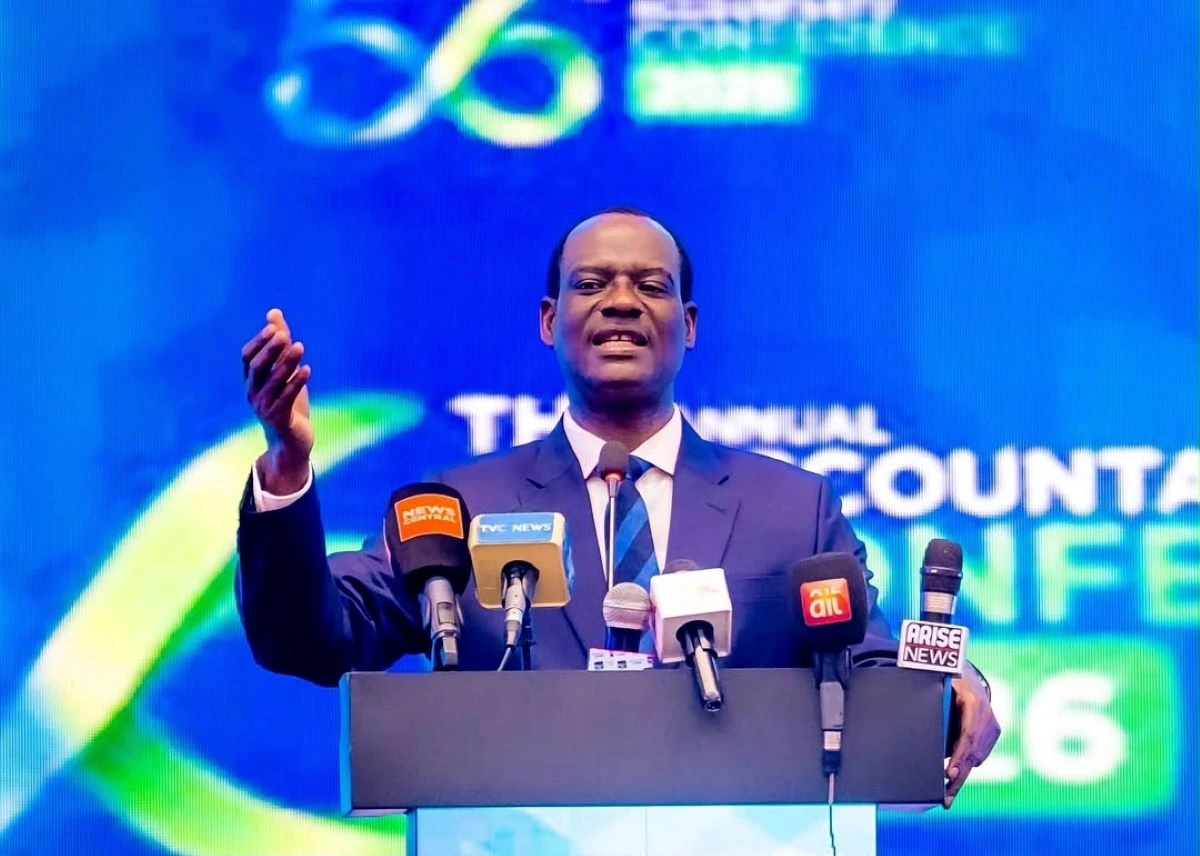
ABUJA, November 21 (Radarr Africa) – The Federal Government will carry outstanding 2026 capital expenditure balances into 2027 as it moves towards a single annual budget cycle, the Federal Ministry of Finance said on Friday.
Taiwo Oyedele, Minister of Finance and Coordinating Minister of the Economy, disclosed the decision after a meeting of the Economic Management Team in Abuja on November 18, 2026. The team reviewed macroeconomic performance and fiscal reforms.
Under the plan, the government will implement as much capital spending as possible in 2026 and then roll the unspent capital balances into 2027. The ministry said the harmonisation is meant to align spending with more realistic revenue and financing assumptions, improve budget implementation and strengthen fiscal discipline.
The ministry said the change should address the challenges created by overlapping budget cycles and make government spending more predictable. It did not give the size of the unspent 2026 capital budget.
The Economic Management Team also reviewed the 2027 Finance Bill, which is expected to update tax laws and extend the tax reform programme. The stated aims are to ease the cost of doing business, lower borrowing costs and channel more financial-sector liquidity to the real economy.
On food prices, members considered a 90-day action plan that the National Economic Council approved and the Federal Executive Council endorsed. The plan targets price stability for cassava, yam, maize and rice, and includes measures on agricultural input delivery, reducing post-harvest losses and better targeting of farm support.
On power, the team reviewed the national gas plan and a power-sector 90-day action plan that aims at consistent grid distribution of about 5,500 megawatts in the near term. The measures include expanding transmission capacity, metering, and protecting infrastructure against vandalism and theft.
Members also considered the draft National Development Plan 2026 to 2036, which is built on seven pillars: macroeconomic stability, energy, industrialisation, infrastructure, governance, security and human capital. The team asked for further review before the formal launch of the plan.
The ministry’s statement said a creative economy bill is before the National Assembly and that a Presidential Council on Tourism is planned, pending approval by the Federal Executive Council. The team also received a presentation on a new national digital addressing system.
The statement cited a series of economic indicators to support the reform push. Real gross domestic product grew 4.43% in the second quarter of 2026, and headline inflation fell to 14.06% in October 2026, the lowest in six years, with core inflation also said to be moderating.
External reserves were estimated at about $55bn, and the exchange rate was described as stable and appreciating. The ministry said Moody’s and Fitch revised their outlooks on Nigeria positively in 2026, while S&P upgraded Nigeria’s sovereign rating from B- to B in May 2026.
The ministry said it will publish finalised financial and economic information on its website before the end of 2026.
The ministry did not give an effective date or the legal instrument that will be used to carry the 2026 capital balances into 2027, and it did not list the ministries or projects that will be affected.
