Nigeria is pushing for a shift away from exporting raw minerals towards local processing and value addition across Africa, as the continent seeks to use its mineral resources to drive industrialisation, create jobs and strengthen economic integration.
Minister of Solid Minerals Development and chairman of the Africa Minerals Strategy Group (AMSG), Dele Alake, said African countries must develop the capacity to process minerals locally instead of relying primarily on exports.
Alake spoke at the third AMSG High-Level Roundtable on Critical Minerals Development on the sidelines of the 81st United Nations General Assembly in New York. The meeting was chaired by Vice President Kashim Shettima and brought together mining ministers and industry stakeholders from across Africa.
He said Africa’s growing importance in the global critical minerals market should translate into industrial development within the continent rather than another cycle of exporting raw materials and importing finished products.
Alake said Nigeria would not simply extract and export its mineral resources without developing domestic processing capacity.
The push comes as global demand increases for critical minerals used in electric vehicles, renewable energy systems, batteries and advanced technologies. African governments are seeking ways to retain more of the economic value generated from the continent’s mineral resources.
Alake also called for stronger regional cooperation to support joint processing projects and investment in mineral corridors.
He signed the Continental Integration and Economic Assurance Declaration (CIEAD), which he said would provide greater political certainty for bilateral and multilateral projects, encourage predictable regional infrastructure investments and support joint continental processing initiatives.
Nigeria seeks stronger mining safety measures
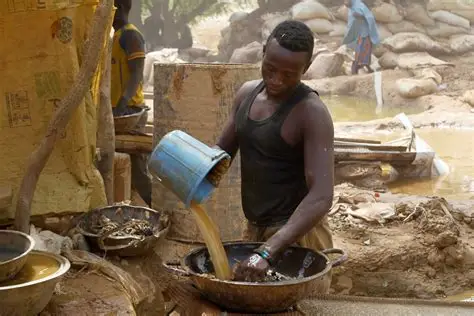
Alake also proposed the creation of a Mine Emergency and Community Recovery Fund to address the human and material losses caused by frequent mine collapses across Africa.
He referenced recent mining disasters in the Democratic Republic of Congo and the Central African Republic, as well as the deaths of detained illegal mining suspects in Nigeria, as examples of the need for a coordinated continental response.
“Each time one of these tragedies occurs, I have had the painful responsibility, as the chairman of this Group, of conveying our condolences,” Alake lamented. “But condolences, however sincere, cannot be the limit of continental solidarity.”
He added: “Behind every casualty figure is a family that has lost a breadwinner, a child who may no longer return to school, a household pushed deeper into poverty, and a community left to cope with a disaster for which it was never equipped.”
The minister proposed a dedicated African safety facility to improve standards in artisanal mining and expand the use of cooperatives across member states.
Rather than criminalising artisanal and small-scale miners, he urged governments to formalise the sector, highlighting its importance to millions of livelihoods and its role in supplying minerals to domestic and international markets.
“If AMSG can mobilise governments, financiers, and investors around the billion-dollar mineral corridors, we should also be capable of mobilising expertise and resources to prevent miners from entering unsupported pits without geological guidance, basic safety systems, or credible emergency response,” Alake argued.
Africa seeks greater value from mineral wealth
The emphasis on formalisation and local processing comes as African countries seek more investment in mining while attempting to retain a larger share of the value generated from their natural resources.
At the meeting, Shettima urged AMSG to use strategic partnerships with foreign governments and companies to accelerate Africa’s industrial development.
He stressed the importance of partnerships based on shared values and mutual benefit, while also calling for greater self-reliance among African countries.
Shettima said Africa’s mineral wealth should be used to modernise its economies and improve living standards instead of primarily supplying raw materials to industries outside the continent.
Samaila Zubairu, chief executive officer of the Africa Finance Corporation, backed the AMSG’s vision and warned that Africa could not afford to delay industrialisation.
Zubairu said the continent needs to accelerate its economic transformation to meet the needs of a population expected to increase by more than one billion people over the next 24 years.
He called for coordinated regional action, saying individual countries acting alone would not be enough to address Africa’s economic and structural challenges.
The meeting brought together representatives from regional organisations, development finance institutions and major mining companies to discuss strategies for developing Africa’s critical minerals sector and ensuring the continent captures more economic value from its mineral resources.
