Financial inclusion in Nigeria has increased to 79 per cent, with about 94.2 million adults now using at least one financial product or service, according to the latest Access to Financial Services in Nigeria (A2F) Survey by Enhancing Financial Innovation and Access (EFInA).
The 2026 survey also found that formal financial inclusion rose to 73 per cent, representing approximately 87.2 million adults. This is above the 70 per cent target established under Nigeria’s National Financial Inclusion Strategy.
The findings were presented at an event attended by government officials, regulators, financial institutions, development partners and civil society organisations.
Speaking during the event, EFInA Board Chair, Dr Agnes Olatokunbo Martins, said the survey provides insights that administrative data alone cannot capture.
She explained that while administrative data provides information about accounts, transactions, infrastructure and financial service providers, the A2F survey provides insight into the experiences of the people using those services.
Martins cautioned against relying solely on national averages when developing financial policies, noting that financial needs vary according to income, gender, location, age and economic activity.
Digital financial services drive growth
Digital financial services recorded significant growth, with 64.4 per cent of Nigerian adults now using digital financial services, compared with 45 per cent in 2023 and 34 per cent in 2020. (ThisDay Live)
The increase highlights the growing role of digital platforms in expanding access to financial services across the country.
However, EFInA said greater access has not translated into similar improvements in financial wellbeing.
EFInA Chief Executive Officer, Foyinsolami Akinjayeju, said, “three out of four Nigerians are not financially healthy.”
She called for greater emphasis on measuring the impact of financial services on people’s economic wellbeing rather than focusing only on access and usage.
CBN calls for better financial outcomes
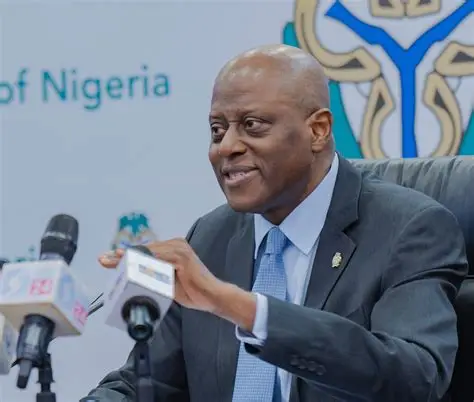
In a keynote address delivered on behalf of Central Bank of Nigeria Governor Olayemi Cardoso, Dr Aisha Isa-Olatinwo, Director of Consumer Protection and Financial Inclusion, said the survey would help guide policy, market development and consumer protection.
Cardoso said: “The policy challenge before us is therefore no longer simply to open accounts or expand access points. It is to ensure meaningful usage, affordability, reliability, safety, trust and measurable improvement in financial health.”
The statement reflects a broader shift from simply bringing more Nigerians into the financial system towards ensuring that financial services provide tangible benefits to users.
Pension coverage remains low
The survey also showed that pension participation increased from 8 per cent of Nigerian adults in 2023 to 9.1 per cent in 2026.
National Pension Commission Director-General, Omolola Oloworaran, welcomed the increase but said a large proportion of Nigerians still lack pension coverage.
“Roughly nine out of every ten Nigerians are not covered for the day they can no longer work,” she said.
The findings highlight the continuing gaps in long-term financial security despite improvements in overall financial inclusion.
Access does not always mean financial security
The latest figures indicate that Nigeria has made progress in expanding access to financial services, but significant challenges remain.
Formal financial inclusion has increased, while digital financial services have expanded rapidly. However, many Nigerians still struggle to achieve financial stability, with gaps remaining in areas such as credit, insurance, pensions and financial health. (Businessday NG)
EFInA Research Lead, Dr Oluwatomi Eromosele, said the nature of Nigeria’s financial inclusion challenge is changing as access improves.
“The message from A2F 2026 is clear: Nigeria’s financial inclusion challenge has changed,” Eromosele said.
The survey therefore points to the need for policies that not only expand access but also improve affordability, financial resilience and the ability of Nigerians to use financial services to build greater economic security.
