LAGOS, November 18 (Radarr Africa) – Nigeria’s headline inflation rate slowed to 14.06 per cent year on year in October 2026, down from 14.63 per cent in September and 18.97 per cent in October 2025, according to the National Bureau of Statistics (NBS). The reading is the lowest in six years.
On a month-on-month basis, however, headline inflation quickened to 0.43 per cent in October from 0.06 per cent in September, the NBS data show. The year-on-year rate fell because price increases a year earlier were far steeper than those recorded in recent months.
Food inflation stood at 19.13 per cent year on year in October, compared with 16.30 per cent in October 2025, the statistics office said. Month on month, food prices fell by 0.75 per cent, a slower decline than the 1.55 per cent fall recorded in September. The NBS said food prices continued to decline, but at a slower pace, and named vegetable oil, locally produced rice, palm oil and croaker among the items behind the movement. The 12-month average food inflation rate was 15.98 per cent, down from 26.47 per cent a year earlier.
Core inflation, which strips out farm produce and energy, eased to 10.78 per cent year on year in October from 21.25 per cent in October 2025. On a month-on-month basis, core prices fell by 0.53 per cent, reversing a 1.11 per cent rise in September, according to the NBS. The 12-month average core inflation rate was 15.67 per cent, against 25.07 per cent a year earlier.
The NBS data also show a gap between urban and rural price pressures. Urban inflation was 14.84 per cent year on year in October, down from 26.99 per cent in October 2025, with a month-on-month rise of 0.43 per cent against 0.53 per cent in September. The 12-month average for urban inflation was 15.59 per cent. Rural inflation was 12.17 per cent year on year, down from 24.58 per cent a year earlier, with a month-on-month rise of 0.18 per cent after a 0.89 per cent fall in September. The rural 12-month average was 14.79 per cent.
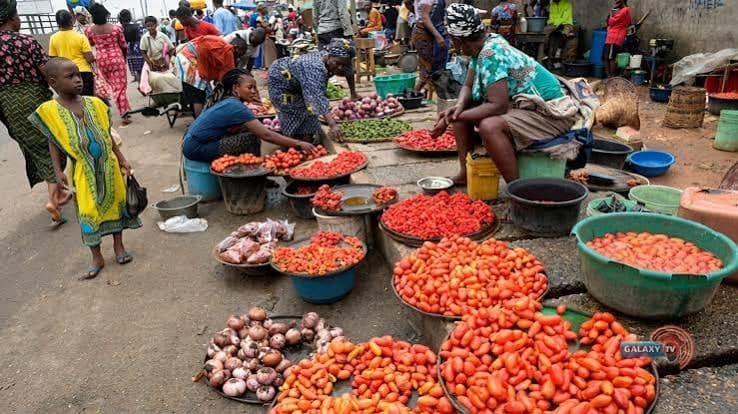
Separate surveys by the Central Bank of Nigeria (CBN) show that households have been slower to feel the relief. The central bank’s household survey found that 77.2 per cent of households rated inflation as high in September 2026, up from 67.2 per cent in August. Among respondents earning below N70,000, 68.4 per cent rated inflation as high in August 2026, the highest share among the income groups surveyed, the CBN said.
The CBN also said businesses and households expect inflation-related pressures to ease over the next six months, according to the same surveys.
The NBS publishes the consumer price index monthly, with separate readings for headline, food and core inflation and for urban and rural areas. The October figures were released on Monday, November 16, 2026.
