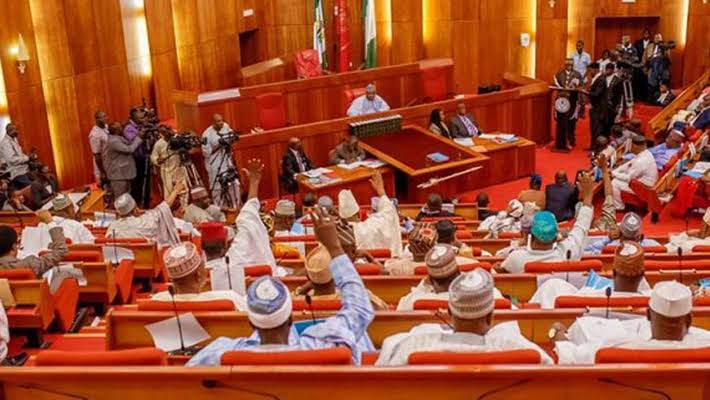
The Senate Committee on Public Accounts has rejected the Nigerian Midstream and Downstream Petroleum Regulatory Authority’s (NMDPRA) records of petrol imports for 2022 and 2023 over significant differences between its figures and those reported by the Nigerian National Petroleum Company Limited (NNPCL).
The committee has resolved to summon the heads of NMDPRA, NNPCL and the Nigeria Extractive Industries Transparency Initiative (NEITI) to explain the discrepancies and reconcile the conflicting data.
The decision followed a review of queries raised against NMDPRA in NEITI’s Oil and Gas Industry Audit Report covering 2021 to 2023.
During the hearing, NMDPRA’s Chief Executive, Rabiu Abdullahi Umar, was represented by Deputy Director Uzoamaka Ugwu-Ojobe, who maintained that the agency’s figures were reliable despite the differences.
According to NMDPRA, Nigeria imported 3.29 billion litres of Premium Motor Spirit (PMS), commonly known as petrol, in 2022 and 6.02 billion litres in 2023.
However, NNPCL reported 6.27 billion litres for 2022 and 3.88 billion litres for 2023, creating substantial differences in the records submitted by the two agencies.
Senators Question Conflicting Petrol Import Figures
Defending NMDPRA’s figures, Ugwu-Ojobe said the agency stood by its records while efforts were being made to resolve the inconsistencies.
“The slight disparities are being looked into for possible reconciliation,” she said.
The explanation did not satisfy members of the committee, who argued that the differences were too substantial to be treated as minor discrepancies.
Senator Abdul Ningi, representing Bauchi Central, said the conflicting figures documented in the NEITI audit required more serious attention. He rejected the suggestion that the differences were slight and called for a thorough explanation from the agencies.
Senator Dayo Faduyile, representing Ondo South, also expressed concern about the reliability of the records, noting that the differences raised questions about how the petrol import figures had been compiled and reported.
The lawmakers said the inconsistencies needed to be investigated to establish the reasons for the divergent figures and determine whether any irregularities had occurred.
Senate Calls for Investigation and Accountability
Senator Anietan Bassey, representing Akwa Ibom North-East, urged the committee to investigate the discrepancies comprehensively, warning that Nigerians must not suffer losses because of inconsistencies in official petroleum records.
He called for the matter to be examined to protect the country’s interests and identify any parties responsible for wrongdoing, should evidence of misconduct emerge.
Following the exchanges, the committee rejected NMDPRA’s explanation and agreed to summon the heads of the three agencies for a joint meeting.
Committee chairman Senator Hassan Dankwabo said the meeting would focus on the conflicting figures contained in the audit report and the reasons behind the substantial differences.
He said the committee found NMDPRA’s presentation unacceptable and required the agencies to provide explanations that could help reconcile the records.
The proposed meeting is expected to clarify whether the discrepancies resulted from differences in reporting methods, record-keeping problems or other issues requiring further investigation.
The development has renewed attention on the accuracy of official petroleum import data and the need for stronger accountability across Nigeria’s oil and gas sector.
