By Radarr Africa Business Desk
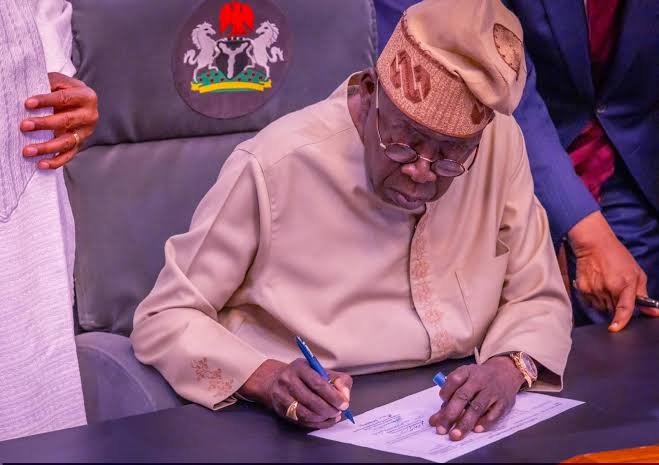
LAGOS, October 28 (Radarr Africa) – President Bola Tinubu has asked the National Assembly to approve fresh external borrowing of about $20.52 billion and €1.045 billion for projects in 2026 and 2027, Naija News and BusinessDay reported on Wednesday.
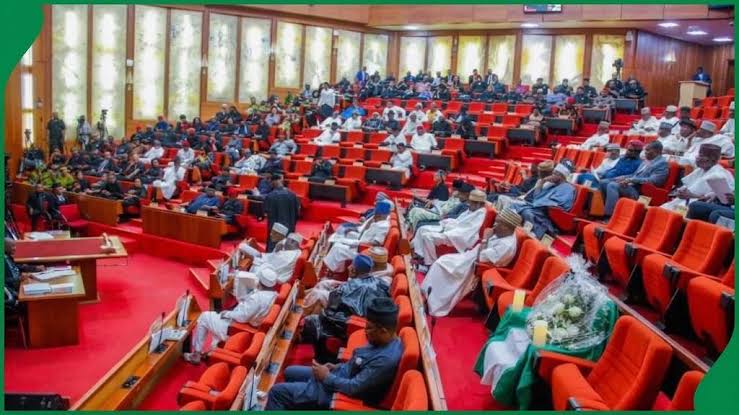
Senate President Godswill Akpabio read the request, contained in a letter titled “Federal Government 2026-2027 Supplementary External Borrowing Plans”, during plenary on Tuesday, according to Naija News. The letter puts the amounts at $20,517,755,901 and €1,045,083,643. BusinessDay put the combined request at $21.67 billion.
The money is meant for infrastructure, agriculture, health, education, water supply, security, job creation and financial management reforms, with most of it going to power, transportation and health, Naija News reported. The projects would be spread across the 36 states and the Federal Capital Territory.
Tinubu argued in the letter that the infrastructure deficit cannot be closed without more foreign financing. BusinessDay quoted him as saying it is “essential to pursue broader external borrowings to close the financing shortfall”. He said the investments would create jobs, build skills, encourage entrepreneurship, reduce poverty and improve food security, the newspaper reported.
BusinessDay said the letter did not identify the individual projects, their expected returns, or whether private financing had been considered. It added that the ADC and Atiku have urged the National Assembly to block the request.
Public debt stood at N166.79trn at the end of June 2026, according to the Debt Management Office (DMO), as cited by BusinessDay. That compares with N87.37trn in June 2023. The newspaper said that if the new loans are approved and disbursed, the total could approach N200trn, depending on exchange rates.
BusinessDay reported that revenue rose from N6.8trn five years ago to N28.7trn in 2025, and that the revenue agency targets N40.7trn for 2026. Ibrahim Bakare, an economics professor at Lagos State University, told the newspaper that the N68.3trn budget would be funded largely by borrowing, “implying that the debt levels will rise”.
Eze Onyekpere, lead director of the Centre for Social Justice, said the central question is “what you actually do with borrowed funds”. He noted that the law permits borrowing only for capital or human capital expenditure, BusinessDay reported.
Sylvester Anaba, head of research at United Capital, cautioned against transferring “excessive risks and liabilities back to the government”. He flagged poorly structured guarantees and minimum-revenue commitments as risks for taxpayers, and said high interest rates, inflation and exchange-rate volatility could weaken returns on the projects.
Ayo Teriba, chief executive of Economics Associates, argued that raising more equity could be used to refinance outstanding debt and bring down interest rates, according to BusinessDay.
The newspaper set out five alternatives to borrowing. These were equity from domestic and foreign investors, infrastructure funds, private equity and sovereign wealth funds; asset sales, concessions and leases, with PwC estimating N180trn in trapped or idle assets; pension assets, which rose 51% to N31.48trn, according to the National Pension Commission; reform of the gas-to-power chain; and public-private partnerships and diaspora infrastructure funds.
On power, Rafiq Raji of BusinessDay’s Board of Economists estimated that at least $50 billion could be mobilised against a financing need of $12 billion a year, the newspaper reported.
The request follows other recent external financing. BusinessDay said a $516.3m Deutsche Bank AG loan for the Sokoto-Badagry Superhighway was approved about five months ago, with a nine-year term, a SOFR-plus-5.3-point rate cap and a grace period of up to three years.
In March, the National Assembly approved a $6bn plan made up of $5bn from First Abu Dhabi Bank for the budget and a $1bn UK export-finance facility arranged by Citibank for the Tin Can Island Port and the Lagos Port Complex, the newspaper said.
The new request now awaits consideration by lawmakers.
