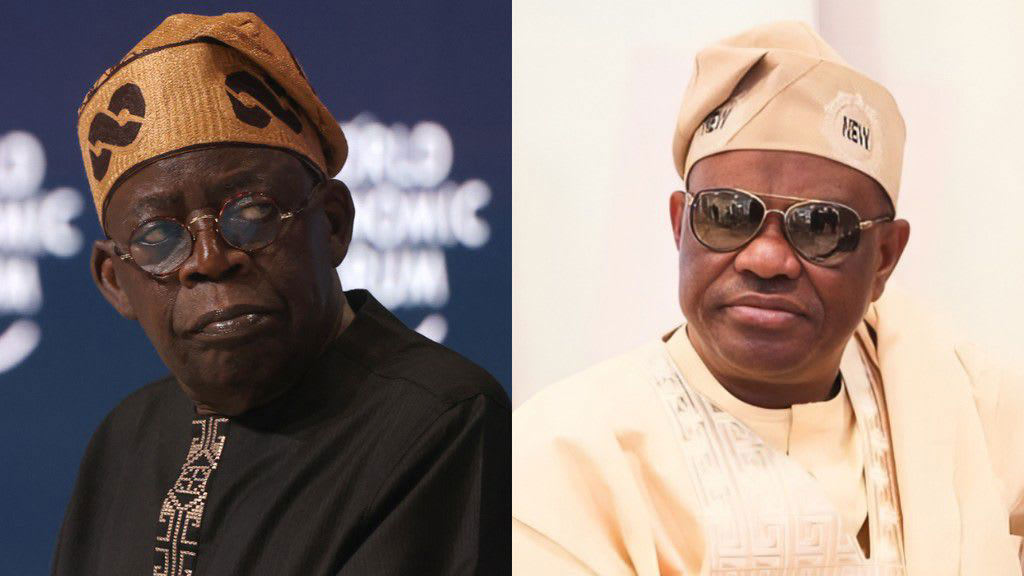
Minister of the Federal Capital Territory, Nyesom Wike, has said President Bola Tinubu does not have the authority to determine how state and local governments spend the additional revenue they receive following the removal of the fuel subsidy.
Wike made the remarks on Wednesday during a media parley in Port Harcourt, Rivers State, while reacting to comments by former Anambra State governor and presidential candidate Peter Obi concerning the management of funds generated from the subsidy removal.
According to Wike, Obi should focus less on the Federal Government and instead question how state and local governments are using the increased allocations they have received.
He said, “All he should have asked is, ‘Having removed the subsidy, what do you do with the gains?’ This is what I think a reasonable person should talk about.
“Now, the government has said the gains have been shared among sub-nationals. Tinubu has no power to say, ‘State, this is what you should do with the funds that you’ve brought in from the fuel subsidy.’
“He has no power to tell local governments what to do with their money. All tiers of government are independent.”
Wike argued that the higher allocations had improved the financial position of many states, allowing them to meet salary and pension obligations while also funding development projects.
“Today states are saying, unlike before, we can’t pay salaries or pensions, and there are strikes all over the place. Now there are no strikes; there are advantages. Now, I have money to carry out projects,” he said.
The former Rivers State governor also commended Tinubu for removing the fuel subsidy, describing the decision as a bold move that previous administrations had been reluctant to make.
“Tinubu deserves kudos for taking the bold decision no president took. Now, it’s time for states to account for the funds they have gotten,” Wike said.
Subsidy Debate Intensifies Ahead of 2027
The controversy over fuel subsidy has gained renewed attention ahead of the 2027 general elections, with leading political figures taking contrasting positions on the policy.
Former Vice President and African Democratic Congress presidential candidate Atiku Abubakar said in an August 25 post on X that he remained committed to restoring the subsidy if elected.
“On the question of subsidy, my position has not changed and will not change: I will restore it! A nation as blessed as ours has no business abandoning its citizens to hardship. Nigeria is rich enough to look after her own,” Atiku wrote.
He argued that national prosperity should be assessed by whether citizens can afford essential goods and services rather than simply by the amount of revenue collected by government.
Obi, however, has continued to support the removal of the subsidy. He said concerns about how the proceeds are being managed should not be used as an argument for returning to the former subsidy system.
Speaking during a panel session at the Nigerian Bar Association Annual General Conference in Port Harcourt on August 25, Obi said the subsidy removal was necessary but should have been followed by a clear and structured plan for using the resources recovered.
Tinubu Calls for Better Use of Increased Allocations
Tinubu announced the removal of petrol subsidy during his inauguration on May 29, 2023, when he declared, “Fuel subsidy is gone.”
Since then, the President has repeatedly urged state governments to ensure that their increased allocations lead to visible improvements in the lives of citizens.
During a July 30 meeting with a delegation of traditional rulers from Oyo State led by the Olubadan of Ibadanland, Oba Rashidi Ladoja, Tinubu said states were receiving significantly more money from the Federation Account than they had in the past.
“The cost of operation is high. But the money that I’m pushing to the states, if you had it during your own time, or during my time, it would have been different.
“They are taking four to five times their money. Nobody is borrowing money to pay salaries now. Pensioners are receiving their pay.
“They should do more instead of building flyovers where there is no numeric traffic; build roads and artery networks to really enhance the quality of life and the accessibility of the security agencies to penetrate those areas.”
