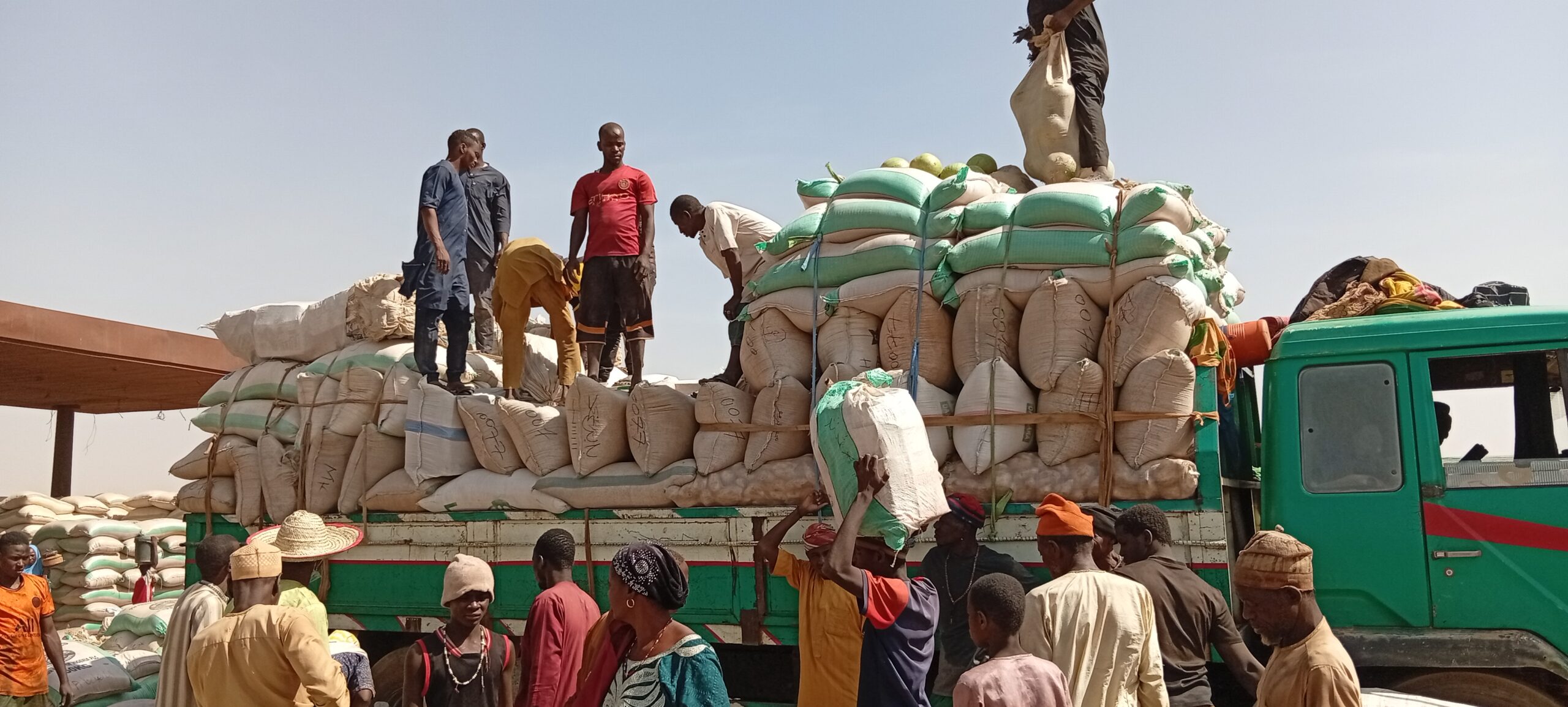
West Africa has spent decades pursuing a regional market where goods produced in one country can reach consumers in another with fewer trade barriers. Yet, for businesses trying to expand beyond their domestic markets, regional integration can still involve navigating complex documentation, customs procedures and inconsistent border requirements.
For a manufacturer in Nigeria seeking customers in Ghana or a trader moving goods between neighbouring countries, the opportunity to reach a larger market may come with practical challenges that make cross-border trade more difficult.
The problem is not simply whether countries have agreed to trade more freely. It is whether businesses can benefit from those agreements without facing avoidable delays, additional costs or uncertainty.
In March 2026, the Economic Community of West African States (ECOWAS) brought together government representatives, private-sector stakeholders and other participants in Abidjan, Côte d’Ivoire, to discuss the future of regional trade. The discussions highlighted persistent obstacles, including non-tariff barriers, fragmented documentation procedures and the need to accelerate digital customs systems. Participants also acknowledged that the region’s common market remains incompletely implemented. ECOWAS
The gap between regional policy and business reality
ECOWAS operates the Trade Liberalisation Scheme (ETLS), which aims to encourage trade in eligible goods produced within the region by providing preferential tariff treatment. The scheme covers qualifying agricultural products, handicrafts and industrial goods, subject to applicable rules of origin and administrative requirements.
However, eligibility does not mean every product automatically qualifies. Businesses must establish that their goods meet the relevant origin criteria, while industrial products are subject to applicable approval procedures.
For smaller manufacturers, navigating these requirements can add administrative work to the process of entering a new market. The extent of the burden varies by product, route and business, making it important to understand how the rules operate in practice.
The difficulties are not merely theoretical. In December 2024, an ECOWAS task force reviewing the implementation of regional trade rules reported continued obstacles to the movement of goods along regional corridors. These included road harassment, inadequate cooperation between national authorities verifying certificates of origin, and restrictions affecting products approved under the trade liberalisation scheme.
The findings indicate that regional agreements alone cannot guarantee smooth trade when implementation differs across borders. ECOWAS
Efforts to simplify cross-border trade
ECOWAS has introduced measures intended to reduce some of these administrative obstacles.
In November 2024, the regional organisation launched an electronic certificate of origin to replace aspects of the paper-based process used to establish whether goods qualify for preferential treatment. The digital system is intended to make verification easier and reduce opportunities for fraudulent certificates.
In March 2026, customs administrations from Nigeria, Ghana, Côte d’Ivoire and Senegal also met to discuss implementing self-certification of community origin under the ETLS. The initiative allows compliant exporters to declare the origin of qualifying goods directly on commercial invoices, without obtaining a certificate of origin from the relevant national authority for that purpose.
The reforms could simplify procedures for eligible exporters, but their effectiveness depends on implementation and acceptance by the relevant customs administrations.
The critical question is whether businesses are experiencing shorter processing times, fewer administrative steps and lower costs as a result. Those outcomes need to be established through exporter interviews and evidence from customs authorities, rather than assumed from the announcement of a new system. ECOWAS
The cost of an incomplete regional market
The broader trade figures underline why implementation matters.
At a regional trade meeting in March 2026, ECOWAS reported that intra-regional trade remained below 15%. The figure points to the limited scale of recorded trade within the region, although it does not, by itself, establish that border barriers are the principal cause.
Trade patterns are influenced by several factors, including the structure of national economies, production capacity, transport infrastructure, consumer demand and the ability of businesses to compete. Administrative obstacles are one part of that wider picture.
For small and medium-sized enterprises, however, uncertainty over documentation, inspections and border procedures can make it harder to calculate the cost of fulfilling an order in another country. Businesses need to know not only whether their products qualify for preferential treatment, but also what procedures they must follow and how reliably those procedures will be applied.
Understanding the practical effect requires evidence from individual trading routes, including freight charges, processing times, applicable fees and the documentation required for specific products.
Turning regional commitments into business opportunities
ECOWAS’s regional trade agenda increasingly recognises the importance of addressing non-tariff barriers, improving border coordination and expanding digital customs systems.
At its regional trade facilitation meeting in June 2026, the organisation highlighted fragmented procedures, multiple checkpoints, duplicated inspections and opaque regulations as continuing obstacles. Participants called for stronger coordination and wider use of digital trade facilitation tools.
For businesses, progress will depend on whether these commitments translate into more predictable border crossings, clearer requirements and fewer unnecessary administrative steps.
A regional market becomes commercially meaningful when companies can identify customers, meet the applicable rules and deliver products at a cost that allows them to compete.
West Africa’s trade integration efforts have established a framework for that ambition. The remaining challenge is to ensure that the framework works consistently in practice, particularly for smaller businesses that may have fewer resources to absorb delays and unexpected expenses.
