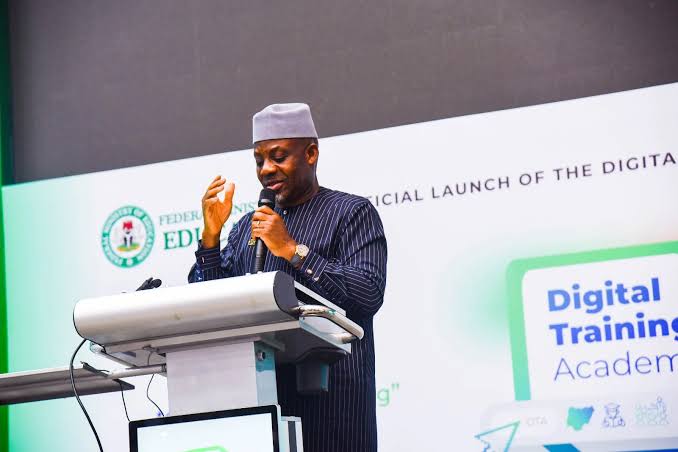
The Federal Government has committed ₦10 billion to a digital skills training programme designed to equip 32,000 Nigerians with globally recognised qualifications and improve their employability.
Minister of Education, Tunji Alausa, announced the initiative in Abuja during the launch of the Digital Training Academy under the Nigeria Education Sector Renewal Initiative.
Training Targets Digital Jobs
The programme will provide free digital and professional training in areas including software development, artificial intelligence, machine learning, cybersecurity, cloud computing, IT automation, natural language processing and quantum computing.
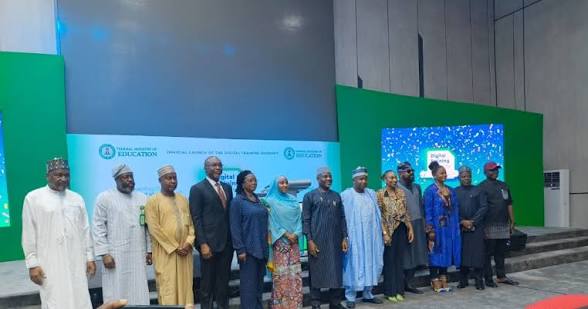
The government is implementing the programme in partnership with global learning providers, including Coursera and Pluralsight.
Alausa said the objective was not simply to increase the number of Nigerians with digital certificates but to ensure the training translates into employment, businesses and higher productivity.
“Our objective here is very clear: to bridge Nigeria’s skills gap, improve employability and enable more of our citizens to take part in the digital economy,” the minister said.
FG Provides Access Centres
The government has also made provisions for access centres equipped with internet connectivity and learning devices across the 36 states and the Federal Capital Territory.
The move is intended to prevent lack of devices or reliable internet access from excluding potential beneficiaries.
The programme targets 32,000 enrolments and certifications, with beneficiaries expected to use the skills acquired to secure employment, support businesses and compete in the global marketplace.
Government Develops Industrial Workforce Strategy
The initiative comes alongside the development of a 10-year National Industrial Workforce Strategy aimed at addressing Nigeria’s persistent skills shortage.
The proposed strategy will include sector-specific workforce plans, stronger technical and vocational education, apprenticeship programmes and greater collaboration between industries and educational institutions.
Emerging fields including artificial intelligence, robotics, automation, renewable energy and advanced manufacturing will also receive attention.
