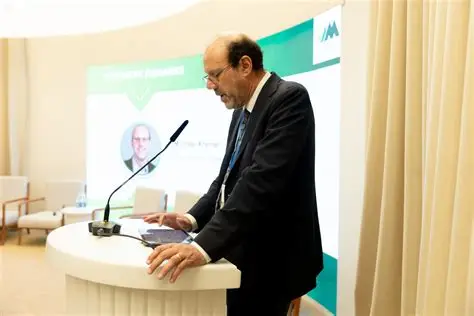
Nobel Prize-winning economist Michael Kremer has been appointed as the World Bank’s next Chief Economist, bringing decades of research focused on poverty reduction, education, health, and economic development across Africa and other emerging regions. Kremer will succeed Indermit Gill and assume the role on October 1.
The appointment places one of the world’s most influential development economists at the helm of the World Bank’s research and policy agenda. Kremer is widely recognised for pioneering evidence-based approaches to tackling poverty and improving outcomes in developing countries, work that earned him the 2019 Nobel Prize in Economic Sciences alongside Esther Duflo and Abhijit Banerjee.
Much of Kremer’s research has focused on practical solutions to challenges facing low- and middle-income countries, particularly in Africa. His work on school deworming programmes helped shape public health policies that have delivered billions of treatments to children worldwide, while his research has also influenced initiatives in agriculture, education, vaccine access, and financial inclusion.
Announcing the appointment, World Bank President Ajay Banga said, “Michael has spent his career not just identifying what works in development, but proving it at scale – and that is exactly the kind of thinking we need.”
Kremer described the opportunity as a chance to translate research into real-world impact, noting that the institution possesses the capacity to develop and test innovative solutions before scaling them globally. He said, “The World Bank Group has tremendous research capacity to develop and test innovative solutions to development problems—and the operational reach to scale them up and improve people’s lives.”
His appointment comes at a time when many developing economies are facing rising borrowing costs, slower growth, and reduced development assistance. Supporters of the move believe Kremer’s strong track record in evidence-based policymaking and development innovation could help shape new approaches to tackling global poverty and creating economic opportunities.
As the first economist to take up the World Bank’s chief economist position after already receiving a Nobel Prize, Kremer is expected to bring fresh perspectives to the institution’s efforts to address some of the world’s most pressing development challenges.
