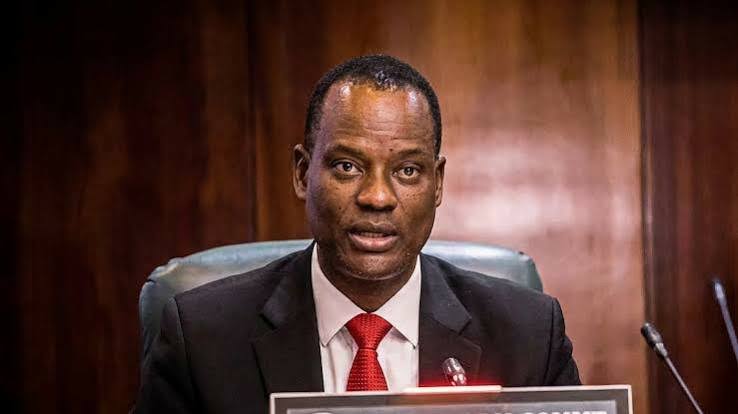
Taiwo Oyedele, Nigeria’s Minister of Finance and Coordinating Minister of the Economy, has dismissed calls to restore petrol subsidies, arguing that the country does not have sufficient freely available crude oil to support such a policy.
Oyedele made the remarks at the opening of the 56th Annual Conference of the Institute of Chartered Accountants of Nigeria (ICAN) in Abuja on Tuesday. He explained that previous subsidy arrangements relied partly on borrowing against future crude oil production, placing additional pressure on government finances.
The minister also criticised political promises to reduce petrol prices to ₦700, ₦500 or ₦300 per litre, or provide fuel free of charge, saying such proposals failed to account for Nigeria’s actual crude oil resources and fiscal constraints.
“We did subsidy to the extent that we exhausted government’s money,” he said, explaining that the government subsequently relied on future crude production to sustain the programme.
Nigeria’s Crude Oil Constraints Limit Subsidy Options
Oyedele said Nigeria’s limited supply of crude oil available for government use was a major obstacle to proposals to revive fuel subsidies through discounted crude.
He explained that although national crude oil production has been increasing, a significant portion is committed to production-sharing agreements, joint ventures, royalties and the costs associated with extracting the oil.
Consequently, the volume available to the government is substantially lower than the country’s total daily production.
The minister noted that before President Bola Tinubu assumed office, less than 100,000 barrels per day remained available to the government after existing commitments.
Although the situation has improved, he said available volumes are still insufficient to support the proposed subsidy arrangements.
“There is no crude,” Oyedele said, stressing that the government could not distribute resources it did not have.
He added that proposals to lower petrol prices by discounting crude oil overlooked the financial and contractual obligations attached to Nigeria’s petroleum production.
Minister Defends Economic Reforms
Oyedele also defended the administration’s economic reforms, including the removal of petrol subsidies and changes to the foreign exchange market.
He recalled that Nigeria previously experienced severe foreign exchange shortages, making it difficult for businesses to obtain dollars for international transactions. Manufacturers struggled to access foreign exchange, while some companies faced operational difficulties and closures.
International airlines also encountered challenges repatriating their earnings from Nigeria, contributing to a backlog of unpaid obligations.
According to the minister, these difficulties reflected deeper structural weaknesses that required changes to the country’s economic management.
He argued that maintaining the former subsidy system would have continued to drain public finances and increase pressure on government resources.
FG Moves to Strengthen Financial Accountability
Beyond defending the reforms, Oyedele said the federal government was working to improve public financial management and strengthen institutions responsible for accountability.
He identified the Budget Office, Fiscal Responsibility Commission, Office of the Accountant-General of the Federation, National Bureau of Statistics and Code of Conduct Bureau among the institutions expected to play stronger roles.
The government also intends to improve internal controls to prevent fraudulent organisations from posing as public agencies to obtain money from individuals, businesses and government institutions.
“One decision we have made is that if we do not strengthen institutions established by law to make us accountable, then we pay only lip service to accountability,” he said.
Oyedele added that the government was working to address delays in publishing audited financial statements and updating its accounts.
He disclosed that the audit of the federal government’s 2022 financial statements had recently been completed, highlighting the backlog in public financial reporting.
The government has directed relevant entities to bring their budgetary accounts up to date by the first quarter of the following year. Going forward, the aim is to publish updated accounts within six months of the end of each financial year.
ICAN Calls for Reforms That Improve Living Standards
Queensley Seghosime, president and chairman of the ICAN Council, urged policymakers to ensure that economic reforms produce tangible improvements in Nigerians’ daily lives.
She acknowledged the government’s reform efforts and Nigeria’s economic growth but stressed that improved macroeconomic indicators must translate into employment, stronger businesses, better public services and improved living standards.
As Nigeria approaches the 2027 general elections, she also emphasised the importance of credible institutions and policies that remain effective beyond individual political administrations.
Seghosime further noted that national security encompasses more than protecting lives and property. It also includes safeguarding food systems, energy supplies, digital infrastructure, livelihoods and public institutions.
She argued that a secure environment supports business activity, while a productive economy creates jobs and strong institutions sustain both.
The discussions at the conference highlighted the challenge facing the government: maintaining economic reforms and strengthening public accountability while ensuring that the benefits of improved economic performance reach ordinary Nigerians.
