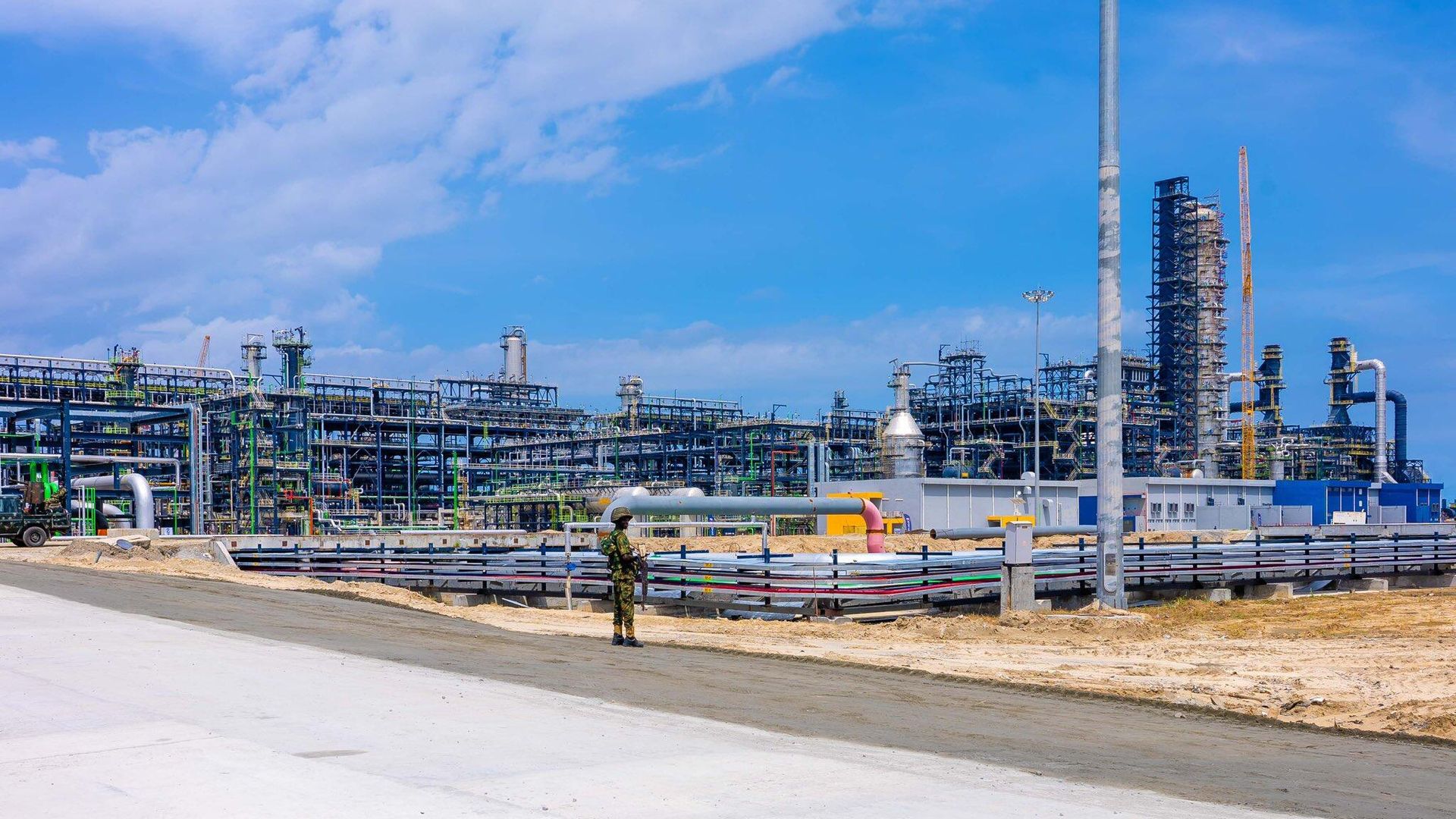
The Crude Oil Refinery Owners Association of Nigeria (CORAN) has called on the Federal Government to take urgent steps to strengthen Nigeria’s domestic refining industry and reduce the country’s reliance on imported petroleum products.
The association made the appeal in a position paper titled, “Position Paper on the Urgent Need for Strategic Government Intervention to Strengthen Nigeria’s Domestic Refining Industry,” issued on Thursday.
CORAN pointed to recent intervention by United States President Donald Trump in the American refining sector, saying Nigeria could draw lessons from the approach. It argued that Nigerian refinery operators face even greater challenges, including foreign-exchange pressures, high borrowing costs, limited access to long-term financing, difficulties securing crude, inadequate infrastructure and expensive logistics.
“It is sound industrial policy. It is energy-security policy. And ultimately, it is economic policy,” the association stated.
CORAN Raises Concern Over Domestic Crude Supply
CORAN expressed concern that Nigeria, despite being one of Africa’s biggest crude oil producers, continues to struggle to supply crude to domestic refineries on commercially viable terms.
The association said that in the first quarter of 2026, 61.9 million barrels were allocated to domestic refineries, while producers offered 68.7 million barrels. However, only 28.5 million barrels were ultimately delivered.
According to CORAN, the Nigerian Upstream Petroleum Regulatory Commission (NUPRC) identified differences in pricing between crude producers and domestic refiners as a major factor behind the gap between crude offered and actual deliveries.
The association acknowledged an improvement in the second quarter, noting that NUPRC reported the supply of 53.7 million barrels of crude oil and condensate to local refineries. This represented reported Domestic Crude Supply Obligation performance of 97.4 per cent.
“CORAN acknowledges and commends this improvement,” it stated.
However, the association stressed that crude allocation figures alone do not guarantee that refineries receive the feedstock they need under viable commercial conditions.
“A refinery does not consume an allocation on paper. It consumes crude delivered under commercially sustainable terms,” CORAN stated.
The group called for crude supply arrangements to take into account factors such as pricing, transportation, evacuation infrastructure, crude quality, financing, payment terms and the proximity of refineries to producing assets.
Refinery Owners Seek New Crude Pricing Framework
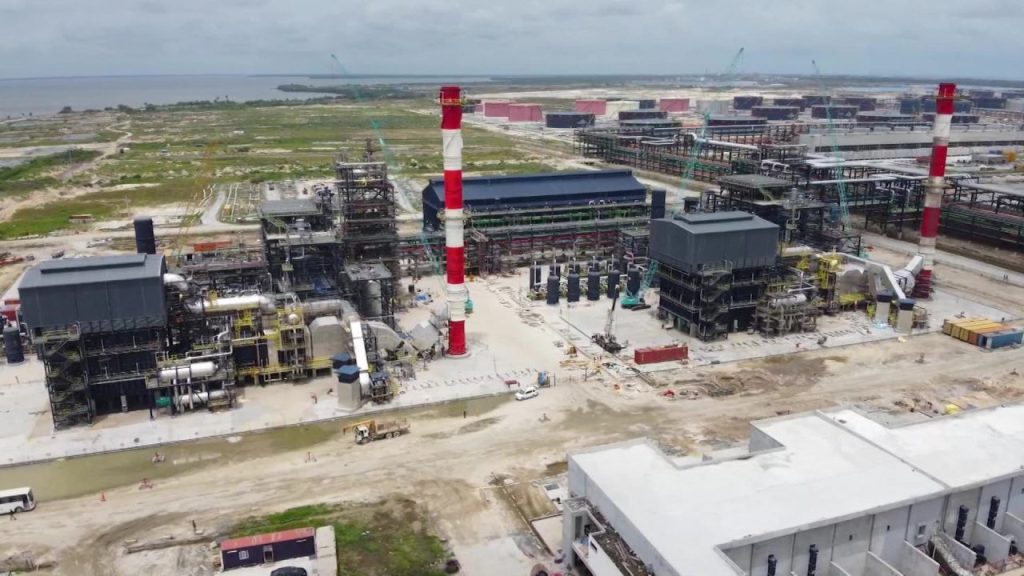
CORAN also called for a commercially realistic pricing system for crude supplied to Nigerian refineries.
While acknowledging the usefulness of international benchmarks such as Brent, WTI and Platts, the association argued that they should not be applied mechanically when domestic refiners are also responsible for additional evacuation and logistics expenses.
CORAN proposed a Domestic Refinery Crude Pricing Framework that would consider international crude benchmarks, quality differences, the actual delivery point, avoided international freight and insurance expenses, domestic transportation and logistics costs, the distance between producing fields and refineries, and reasonable commercial margins for producers.
“The objective is not subsidised crude. The objective is correctly priced crude,” CORAN stated.
CORAN Warns Against Rising Fuel Imports
The refinery owners also raised concerns over the return of higher petroleum-product imports, urging the government to ensure imported fuel is increasingly used only to cover genuine supply shortfalls.
CORAN cited data from the Nigerian Midstream and Downstream Petroleum Regulatory Authority (NMDPRA), which showed that domestic PMS supply fell from about 32.5 million litres per day in June 2026 to 25.8 million litres per day in July. During the same period, petrol imports increased from approximately 18.1 million litres to 19.7 million litres per day.
The association said Nigeria still needs sufficient petroleum-product stocks and stressed that it does not support policies that could lead to artificial shortages.
However, it warned that maintaining a continuous import regime while domestic refining investments expand could discourage both existing and potential refinery projects.
“A continuous import regime existing alongside substantial domestic refining investment exports Nigerian jobs and refining margins, places additional demand on foreign exchange, weakens investment incentives for existing and prospective refineries, exposes Nigeria to international freight disruptions and geopolitical shocks, and ultimately undermines the country’s aspiration to become a petroleum-product refining and export hub,” it stated.
CORAN urged authorities to increasingly link import licences to independently verified domestic production levels and identified supply gaps.
It also said locally produced petroleum products that meet the required specifications and commercial standards should be given priority in the Nigerian market.
Financing Remains a Major Challenge
Access to funding, according to CORAN, remains one of the biggest obstacles facing Nigeria’s emerging refining industry.
The association noted that refineries require significant capital for processing facilities, storage, utilities, pipelines, loading infrastructure, environmental systems, laboratories, fire-protection equipment and working capital.
CORAN urged the government to view refineries as strategic industrial infrastructure rather than simply downstream petroleum businesses.
“Every barrel refined within Nigeria has the potential to retain economic value that would otherwise leave the country,” it stated.
The association said expanding domestic refining could support jobs and growth across engineering services, fabrication, transportation, petrochemicals, lubricants, plastics, construction materials and other industries while helping Nigeria conserve foreign exchange.
Call for a Stronger Refining Ecosystem
CORAN advocated for a network of large, medium-sized and modular refineries located strategically near crude-producing areas and major centres of consumption.
“The success of one refinery should not mark the completion of Nigeria’s refining ambition. Nigeria requires an ecosystem,” CORAN stated.
To tackle the industry’s challenges, the association called for an urgent Presidential Refining Industry Roundtable involving CORAN, NUPRC, NMDPRA, NNPC Limited, crude producers, financial institutions, infrastructure investors and relevant government ministries.
The association proposed 10 priority measures, including fully institutionalising naira-for-crude transactions, establishing a domestic crude pricing framework, strengthening enforcement of the Domestic Crude Supply Obligation under Section 109 of the Petroleum Industry Act and expanding the use of crude swaps.
It also called for a gradual reduction in petroleum-product imports, the creation of a dedicated refinery-development financing framework, shared petroleum-product infrastructure and strategic fuel reserves.
CORAN further proposed regulatory and fiscal incentives to encourage refinery expansion, particularly investments in conversion units that can increase domestic production of PMS, AGO, aviation fuel and LPG.
“Government intervention should therefore increasingly move away from subsidising consumption and toward enabling production,” it stated.
The association added, “Support the refinery. Support the pipeline. Support the storage terminal. Support access to commercially priced Nigerian crude. Support long-term industrial finance.”
CORAN Wants Nigeria to Become Africa’s Refining Hub
CORAN said Nigeria should ultimately position itself as a major refining hub for Africa, with domestic refineries supplying the local market and supporting regional exports.
“Nigeria should not continue exporting crude, exporting jobs and importing the same petroleum products at considerable economic cost.
“Our crude must increasingly power our refineries. Our refineries must increasingly supply our market. And Nigeria must ultimately become a refining hub for Africa.”
“That should be the destination of petroleum-sector reform,” the association stated
