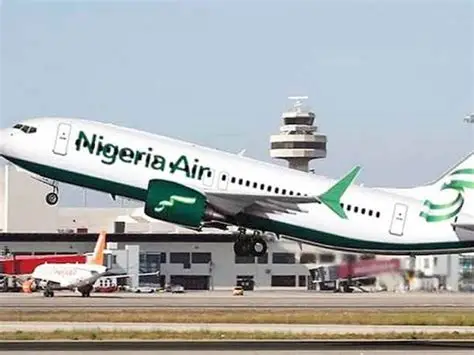
Nigeria’s scheduled airline capacity increased by 37.4 per cent year-on-year to 1.19 million seats in September 2026, reflecting increased activity in the country’s aviation sector.
The Federal Airports Authority of Nigeria (FAAN) said the growth was the fastest among Africa’s 10 largest aviation markets. The increase was attributed to currency reforms, new aircraft leasing arrangements and growing confidence among international airlines looking to expand their operations in Nigeria.
FAAN Managing Director Olubunmi Kuku disclosed the figures at the opening of the Airports Council International (ACI) Africa Conference and Exhibition 2026 in Abuja.
Nigeria also recorded more than 18.8 million domestic and international passengers in 2025, representing an 11.9 per cent increase from the previous year. The figure placed the country among Africa’s largest aviation markets.
Lagos airport records strong capacity growth
The Murtala Muhammed International Airport (MMIA) in Lagos recorded a 24.1 per cent increase in scheduled seat capacity in September, making it the fastest-growing among Africa’s 10 largest airports during the period.
“The Murtala Muhammed International Airport in Lagos, whose oldest terminal is being rehabilitated and upgraded as we speak, recorded the fastest growth in scheduled seat capacity among Africa’s ten largest airports in September, with a remarkable 24.1 percent increase,” Kuku said.
The increase comes as airport authorities continue rehabilitation and infrastructure upgrades at the Lagos airport.
African air travel demand continues to rise
The growth in Nigeria’s aviation market comes amid stronger passenger demand across Africa.
According to International Air Transport Association (IATA) data cited by Kuku, African airlines recorded a 6.4 per cent year-on-year increase in international passenger demand in July 2026.
This compared with a 0.1 per cent decline in global international passenger demand during the same period.
“While global international demand actually declined by 0.1 per cent during the same period, Africa was expanding. We are not just participating in global aviation recovery, we are leading it,” Kuku said.
She added that overall passenger demand in Africa increased by 5.2 per cent, putting the continent behind only Latin America and the Caribbean while remaining above the global average growth of 0.2 per cent.
“These figures are not abstract. They represent millions of Africans connecting with family, doing business, accessing healthcare, and exploring opportunities.
“They represent livelihoods. They represent economic growth. They represent the future we are building together,” she said.
Aviation sector still faces major challenges
Despite the increase in passenger numbers and airline capacity, Kuku said Africa’s aviation sector continues to face structural challenges.
Africa accounts for about one per cent of global air traffic despite having roughly 18 per cent of the world’s population. Airline load factors also remain below global averages, while the financial sustainability of several African carriers remains fragile.
“In Nigeria alone, with a population exceeding 220 million, we record approximately 19.5 million passengers annually across 28 airports,” Kuku said.
She said the figures show the potential for further growth but also highlight the gap between the sector’s current performance and its broader possibilities.
Among the major challenges she identified were limited funding, inadequate infrastructure, high operating costs, fragmented connectivity and pressure to keep airport charges low while maintaining quality facilities.
“This is not a reason for despair, it is a reason for deliberate, strategic action. The challenges are real: funding constraints, infrastructure gaps, high operating costs, fragmented connectivity, and the persistent pressure to keep charges low while delivering world-class facilities,” she said.
The issues are expected to remain central to discussions around the development of airports and the long-term growth of Africa’s aviation industry.
