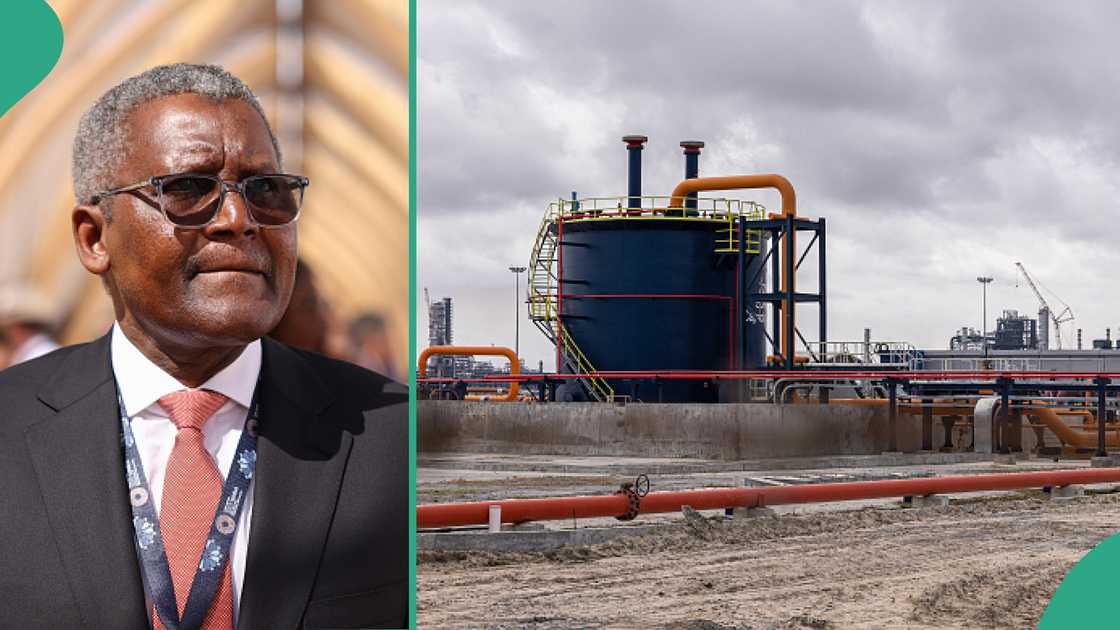
The price of petrol is nearing N1,400 per litre in some parts of Nigeria following a series of price increases by the Dangote Petroleum Refinery.
The refinery has defended its latest adjustments, explaining that the price of petrol is influenced by the cost of crude oil purchased earlier, as well as the lengthy process involved in buying, transporting and delivering crude to the facility.
The explanation comes as the pump price of Premium Motor Spirit (PMS), commonly known as petrol, has risen to between N1,310 and N1,400 per litre, depending on the location.
In Lagos and Ogun states, petrol is currently selling for around N1,310 per litre, while prices in northern states and other areas farther from the refinery have climbed to N1,350 or more.
Dangote Raises Petrol Price Three Times
The latest increase followed Dangote refinery’s decision to raise its PMS gantry price by N65 per litre, from N1,200 to N1,265, effective August 29.
It was the third price increase announced by the refinery within eight days.
The successive increases have come even as international crude prices have declined amid continuing tensions between the United States and Iran.
However, a senior Dangote refinery executive, who spoke to The PUNCH on condition of anonymity because he was not authorised to speak publicly, explained that current international crude prices cannot be used on their own to determine the cost of petrol produced from crude that was purchased earlier.
According to the executive, there can be a considerable delay between purchasing crude and receiving it at the refinery for processing.
Raising a series of questions, he said, “If you want to buy crude at today’s price, when do you think you will complete the actual transaction to purchase the crude? When will you get a laycan? When can you get a ship chartered and a charter party agreement signed? When will the ship go to load the crude and secure the laycan for discharge? When is the sailing time before the crude eventually gets into your tank?”
He also highlighted the impact of crude already purchased at higher prices.
“And what will happen to the huge quantities of expensive crude that you bought long ago and stored in the tanks? These are the factors determining the change in prices, not an immediate crude price change,” the source stated.
The explanation represents Dangote’s response to criticism over repeated petrol price increases despite declines in some international crude benchmarks.
How Much Has Dangote Petrol Increased?
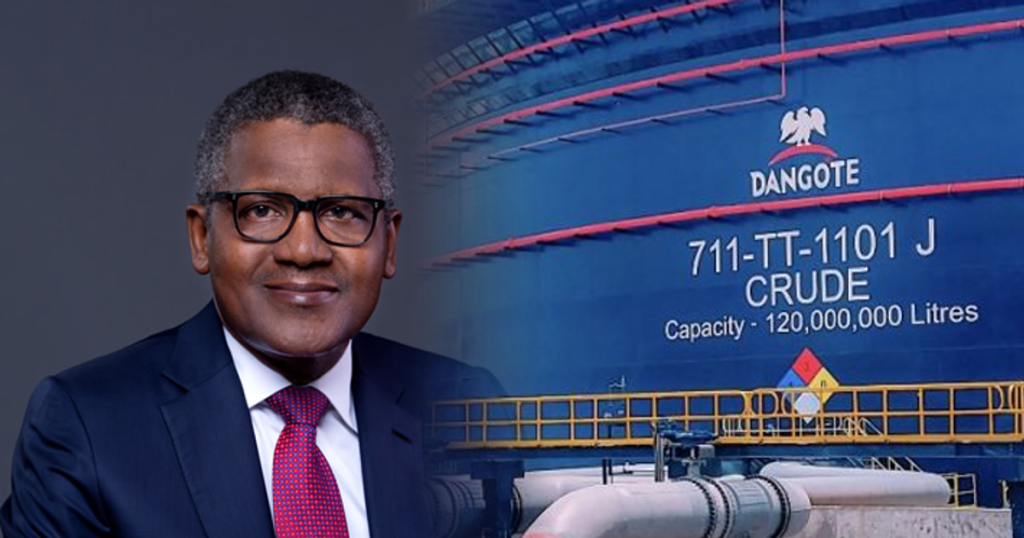
Dangote refinery first increased its gantry price from N1,165 to N1,185 per litre on August 21.
Five days later, it added another N15, taking the price to N1,200 per litre from August 26.
On August 29, the refinery announced the latest N65 increase, bringing the gantry price to N1,265 per litre.
The three adjustments have increased the refinery’s gantry price by N100 per litre in just eight days, representing an increase of about 8.6 per cent.
The latest adjustment also raised the refinery’s coastal PMS price from N1,582,380 to N1,669,545 per metric tonne.
In its price notification, the refinery instructed customers to return their existing Authorisations to Collect for repricing. It said new volume contracts would be issued before loading could resume.
Petrol Prices Rise Across Nigeria
The impact of the latest increase is already being felt at filling stations, with petrol selling at about N1,310 per litre in Lagos and Ogun and N1,350 or more in parts of northern Nigeria and other distant markets.
In some areas, pump prices are approaching N1,400 per litre.
The variation in prices across different locations is partly linked to the cost of transporting petrol from the coastal refinery and storage depots to distant markets. Transportation and other distribution expenses add to the final cost paid by consumers.
This is one of the reasons Dangote refinery plans to expand its free distribution programme across the country.
Dangote Price Compared With Import Parity
The latest increase has also renewed debate about the relationship between international crude prices, refined-product costs and pricing decisions by domestic refineries.
Data from the Major Energies Marketers Association of Nigeria’s Energy Bulletin for August 27 showed that Dangote refinery’s PMS gantry price stood at N1,200 per litre.
The estimated spot import-parity price of petrol delivered into tanks was N1,222.32 per litre, while the NPSC-NOJ spot estimate was N1,221.32 per litre.
This meant Dangote’s N1,200 gantry price was N22.32 below the N1,222.32 spot import-parity estimate on August 27.
However, two days later, Dangote increased its gantry price to N1,265 per litre, placing it N42.68 above the August 27 spot import-parity estimate. It remains unclear whether the import-parity figure has changed since then.
Crude Prices Remain Volatile
Global crude markets have remained volatile amid geopolitical tensions involving Iran and the United States, as well as uncertainty surrounding crude shipments through the Strait of Hormuz.
According to Oilprice.com, Brent crude closed at $88 per barrel, while West Texas Intermediate (WTI) ended at $83 on Friday, representing a 5 per cent decline.
However, the Dangote executive said daily movements in international crude prices do not necessarily reflect the cost of crude already purchased by a refinery.
He explained that crude procurement involves negotiating and completing transactions, securing loading windows, chartering vessels, loading the crude, transporting it to Nigeria and obtaining a berth before the shipment can be discharged into storage tanks.
As a result, crude being processed at a refinery may have been purchased weeks or months earlier, when international prices were significantly different.
The executive also pointed to the refinery’s existing crude inventory, arguing that much of the stock may have been purchased when prices were higher.
The refinery’s position is that immediately reducing petrol prices whenever international crude benchmarks fall could result in selling products made from expensive existing inventory at prices based on cheaper replacement crude.
The issue is particularly relevant to Dangote because the refinery does not depend entirely on locally produced crude. Reuters reported on August 26 that between 30 and 40 per cent of the refinery’s crude feedstock was being imported.
Marketers Warn of Business Uncertainty
The latest price increases have raised concerns among petroleum marketers, who say frequent price changes are making it increasingly difficult to plan their businesses.
The National Publicity Secretary of the Independent Petroleum Marketers Association of Nigeria (IPMAN), Chinedu Ukadike, said several factors could contribute to higher petrol prices.
“We are facing the challenges of the volatility in the market. There are policies of the government, policies of the international market, and exchange rates. These are inherent dispositions to the increase in pump prices. We are not refiners to be able to determine the price of petroleum products.”
Ukadike acknowledged that Dangote had previously reduced petrol prices in response to international market movements.
“But, I also believe that Dangote has been consistent in terms of reducing its price in line with the international market rate. With this situation now, we cannot, at this particular point in time, structure our business. It’s going to be too difficult for us to structure our business,” he stated.
He also warned that prolonged tensions between Iran and the United States could contribute to further price instability.
“The more the Iran and United States crisis continues to persist, the more we’ll be having these irregularities in price,” he added.
Ukadike said the fluctuations were already affecting petrol prices nationwide.
“Also, bear in mind that the price of crude oil is determined by the international market. So, for all the independent marketers, we will continue to strive. Prices have been fluctuating, and we are still loading. The price of petrol will continue to be volatile as long as the price of crude is not stable and other factors relating to the financial situation,” Ukadike noted.
The IPMAN official said marketers and consumers ultimately bear the impact of the changing prices.
The development comes as African Democratic Congress presidential candidate and former Vice President Atiku Abubakar has said he would reintroduce fuel subsidies as part of efforts to reduce economic hardship and the rising cost of living.
