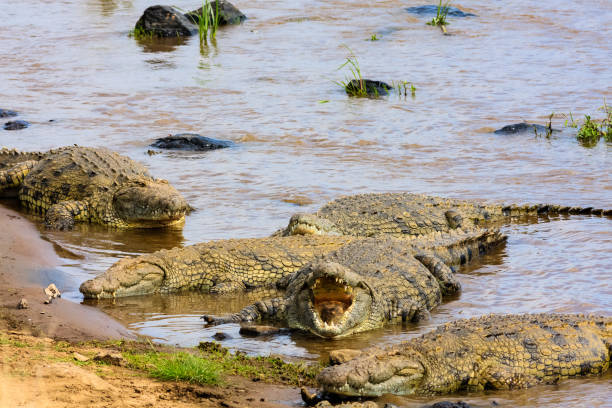
Kenyan wildlife authorities have begun relocating crocodiles from the shores of Lake Baringo as rising water levels push the reptiles closer to homes and increase the risk of conflict with residents.
Water levels in several lakes across Kenya’s Rift Valley have reached heights not seen in decades. Scientists have linked the increase to extreme rainfall associated with climate change.
The rising waters have displaced tens of thousands of people to higher ground, according to official figures, while also forcing wildlife into areas where people live and work.
With the El Nino weather pattern expected to bring more heavy rainfall in the coming weeks, the Kenyan government launched a week-long operation around Lake Baringo to capture and relocate some of the larger crocodiles.
Wildlife Officers Face a Difficult Task
Capturing the reptiles is proving challenging, with authorities using carefully planned methods to lure the crocodiles into traps.
One technique involves playing a recording of a distressed dog through a speaker near the lake. The sound is used to attract crocodiles towards a net trap baited with dead fish.
During an operation observed by AFP, wildlife officers asked residents gathered near the lake to remain quiet and keep out of sight so they would not frighten the crocodile away.
“Catching them is not easy, they are very shy… it is difficult to lure them… and dangerous,” said Dominic Mijele, a Kenya Wildlife Service (KWS) veterinary officer overseeing the operation.
Several crocodiles were seen moving around the edges of the trap without entering it. Officers said the animals had become more cautious after at least five crocodiles were previously captured at the same location.
KWS said about 13 crocodiles have so far been captured and moved to a protected park. Authorities are aiming to relocate at least 30 by the end of the operation.
Crocodile Takes Nearly 30 Minutes to Secure
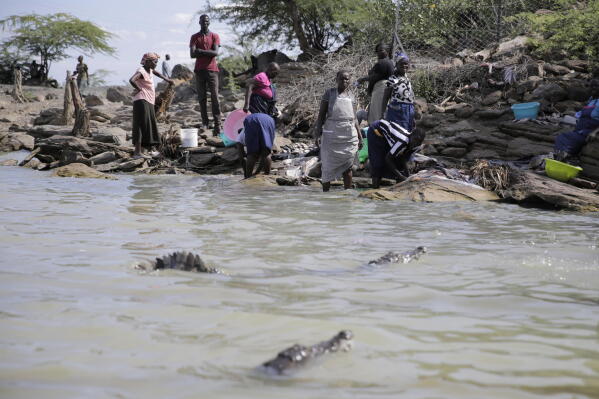
One mid-sized crocodile eventually entered the trap, allowing officers to pull it from the lake using a vehicle attached to the net.
The animal was briefly lifted above the water before being dragged onto the shore. It fought back aggressively, twisting and thrashing as it attempted to escape.
A group of KWS officers spent almost 30 minutes struggling with the net before finally securing the crocodile.
“It is the one that has been disturbing me at my home every day,” said a woman who works as a fishmonger and had joined other residents watching the capture.
Rising Waters Increase Risks for Residents
Lake Baringo is estimated to contain more than 200 crocodiles, according to Mijele. The relocation programme is focusing on larger animals weighing 200 kilograms or more as authorities try to reduce the danger to nearby communities.
An AFP analysis of Copernicus Sentinel and NASA Landsat satellite images found that the lake has grown by about 70 per cent since 2010, covering roughly 234 square kilometres (90.3 square miles).
“We fear that when the El Nino rains come, this water will continue rising and flush the crocodiles into the village,” said Mijele.
At fishing areas around the lake, many fishmongers welcomed the relocation effort, saying crocodiles have made their daily work increasingly difficult and dangerous.
“It is a great relief, they have terrorised us for a long time… they destroy our fishing nets every day,” said Dorcas Kiplagat, a 35-year-old fishmonger.
Residents Divided Over the Relocation
Although many locals support efforts to move crocodiles away from homes and fishing areas, some residents worry that removing the animals could hurt tourism and businesses that depend on visitors.
“It is enough now… what are we going to show foreign tourists?” one middle-aged local said after the capture.
The relocation effort reflects the growing challenge of protecting wildlife while also keeping communities safe as changing weather patterns alter the environment around Kenya’s lakes.
