By Radarr Africa Business Desk
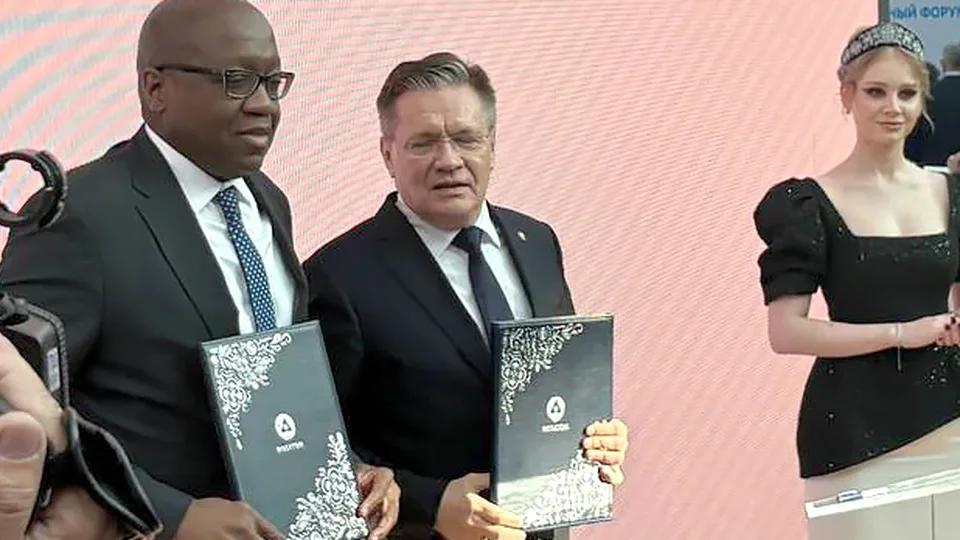
LAGOS, October 29 (Radarr Africa) – Russia’s state nuclear corporation Rosatom has said it could supply floating nuclear power plants to coastal African countries and is in advanced talks with at least four of them, Reuters reported from the Russia-Africa Summit in Moscow.
Rosatom chief executive Alexei Likhachev named Egypt, Togo, Namibia and Tanzania as the countries in advanced discussions, according to the report. He said a meeting between the Russian and Egyptian presidents, scheduled for Wednesday, could boost the Egypt prospect.
Vladimir Aptekarev, deputy head of Rosatom’s machine-building division, said 38 of Africa’s more than 50 countries have enough coastline to host a Russian-made floating unit. He said such a unit “can serve as a good entry point” for a country to meet its energy needs and join the nuclear club, Reuters reported. He added that, with this source of electricity, Rosatom is effectively addressing all the key issues and challenges facing the continent.
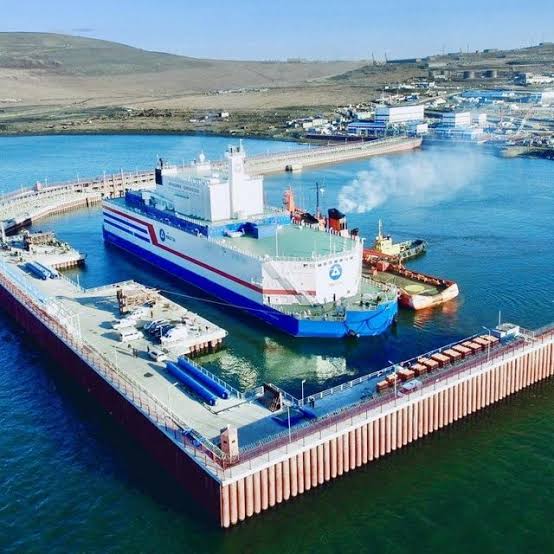
Rosatom proposes a power purchase agreement model, under which servicing and refuelling would take place in Russia and units could operate for up to 60 years, according to the report. Floating plants use smaller reactors and sit in a vessel that can be towed, so they need less land infrastructure and can be deployed faster and more cheaply, Reuters said.
For international markets, Rosatom offers 100 megawatt floating units with RITM-200M reactors adapted for warm climates. The only floating nuclear plant operating anywhere in the world is in Russia’s remote Chukotka region, where it has been in service since 2020, Reuters said. Rosatom has also reached an agreement with Indonesia for what it calls the world’s first export of electricity from floating nuclear units, covering two units with a combined 200 megawatts.
Rosatom is already building Egypt’s El Dabaa plant, which will have four 1,200 megawatt units using Russian-designed VVER-1200 reactors. Reuters said it would be Africa’s second nuclear station after South Africa’s Koeberg, which uses French technology and dates from the mid-1980s.
The third Russia-Africa Summit is a two-day event in Moscow, according to Reuters. The first was held in 2019. Delegations from 48 countries are attending, including 22 African leaders, and Russian President Vladimir Putin planned one-on-one talks with many of them on trade, security, arms deals and grain supplies.
Putin told delegates that Russia is Africa’s best partner and accused the “colonial” West of exploiting the continent’s resources and using debt to slow development, without naming specific countries. He said Russian business “does not engage in the predatory, neo-colonial exploitation of natural and human resources”.
He said Russia supplied 13 million metric tons of agricultural products to Africa in the first nine months of 2026 and currently supplies grain and fertiliser to 40 African countries. About 40,000 Africans study at Russian universities, he said. Putin also said Russia backs a greater African role in the International Monetary Fund and the World Bank and is ready for joint transport and agricultural infrastructure projects.
Reuters noted that Western governments accuse Russia’s paramilitary Africa Corps of propping up military juntas such as Mali’s. Moscow rejects the claims.
Africanews reported earlier this week that the summit runs on 28 and 29 October at the Russia National Center in Moscow, and that Burundian President Evariste Ndayishimiye, who chairs the African Union, was expected to co-chair the meeting with Putin.
