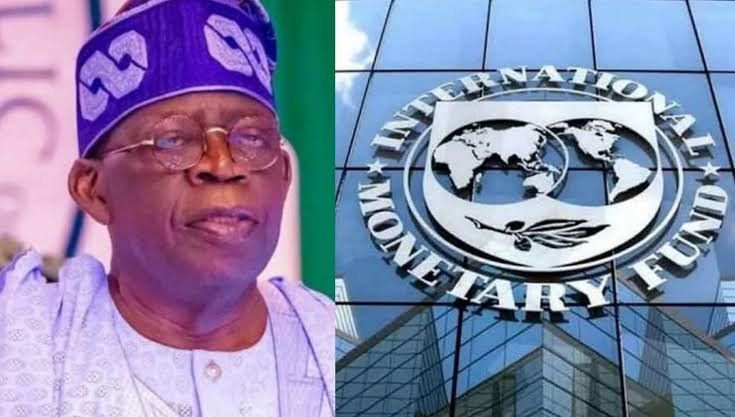
The International Monetary Fund (IMF) has projected Nigeria’s economy to grow by 4.3 percent in 2027, up from 4.2 percent in 2026, as inflation gradually eases. However, the Fund warned that persistent increases in essential-goods prices could deepen poverty and food insecurity.
In its latest World Economic Outlook released on October 13, 2026, the IMF estimated Nigeria’s economic growth at 4.0 percent in 2025, with the rate expected to rise to 4.2 percent in 2026 and 4.3 percent in 2027.
The Fund also forecast consumer price inflation to fall from 23 percent in 2025 to 15.6 percent in 2026 and 14.7 percent in 2027, signalling a gradual reduction in price pressures.
Despite the improving projections, the IMF cautioned that stronger economic indicators would not automatically translate into better living conditions for households already struggling with rising costs.
Deniz Igan, Chief of the IMF Research Department’s World Economic Studies Division, said Nigeria’s economy had remained resilient, although poverty levels were still high and many households continued to face economic difficulties.
Speaking during a press briefing at the ongoing IMF and World Bank annual meetings in Bangkok, Thailand, she stressed the importance of balancing immediate social needs with long-term fiscal stability.
IMF recommends targeted support for vulnerable households
Igan said countries facing a cost-of-living crisis could consider temporary and targeted income support to protect vulnerable populations.
Using Nigeria as an example, she explained that cash transfers could help reduce the pressure on low-income households and support food security, provided such measures remained consistent with a sustainable fiscal framework.
She added that social interventions should be accompanied by better public spending and stronger revenue collection.
The IMF’s assessment highlights the challenge facing Nigerian policymakers: sustaining economic stability while ensuring that improvements benefit households and reduce hardship.
Sub-Saharan Africa growth outlook remains steady
The IMF projected economic growth across sub-Saharan Africa at 4.5 percent in both 2026 and 2027. However, it noted that the regional outlook varied considerably because of differences in domestic policies, commodity exposure, climate-related shocks and access to external financing.
Nigeria’s outlook is supported by improved macroeconomic stability and favourable terms-of-trade effects. Nevertheless, the Fund warned that higher prices for essential goods could worsen poverty and food insecurity.
It also highlighted the challenges facing many African economies as official development assistance declines and the benefits of the global artificial intelligence-driven technology boom remain concentrated in a limited number of countries.
Excluding major economies highlighted in the report, growth across the rest of the region is projected to slow from 5.6 percent in 2025 to 5.5 percent in 2026 and 5.3 percent in 2027.
Global pressures threaten economic stability
The IMF’s projections come amid rising energy and commodity prices linked partly to the conflict in the Middle East, alongside increased investment and demand driven by artificial intelligence.
Silvana Tenreyro, the IMF’s Economic Counsellor and Director of Research, said these developments were creating competing pressures on global economic activity while contributing to inflation.
She explained that higher energy and commodity prices were raising costs and weighing on production, while AI-related investment was supporting demand, trade and economic activity.
The Fund projected growth in emerging market and developing economies to slow from 4.5 percent in 2025 to 3.7 percent in 2026 before recovering to 4.4 percent in 2027.
China’s economy is projected to grow by 4.5 percent in 2026, while India’s growth is forecast at 7 percent. In the Middle East and Central Asia, the IMF expects growth to contract by 0.3 percent in 2026 before rebounding to 6.3 percent in 2027.
For Nigeria, easing inflation and stronger projected growth point to an improving economic outlook. However, the IMF emphasised that sustained progress will depend on policies that protect vulnerable households while preserving fiscal stability.
Ultimately, reducing the cost of essential goods, improving food security and translating economic growth into better living standards remain key challenges for the country.
Read also on Radarr: IMF Commends Nigeria’s Economic Reforms, Projects 3.9% Growth in 2025 | IMF Projects 3% Growth for Nigeria in 2025, Outpacing Most Emerging Markets
