By Radarr Africa Business Desk
LAGOS, October 24 (Radarr Africa) – South Africa will reintroduce temporary fuel levy cuts for two months from November, Finance Minister Enoch Godongwana announced on Wednesday, October 21, in a package costing 10 billion rand (about $609 million) that is meant to ease cost-of-living pressure.
According to a Reuters report carried by CNBC Africa, the levy will fall by 3 rand per litre on diesel and 1.50 rand per litre on petrol from November 4 to December 1. Smaller reductions of 1.50 rand on diesel and 1 rand on petrol will remain in place until January 5.
The measure revives cuts that applied from April to June, which were introduced after oil prices surged amid conflict in the Middle East. South Africa imports most of its fuel and is therefore exposed to swings in global energy prices. Reuters put the price paid by motorists at about $6.95 per US gallon of petrol, roughly 62 per cent above the US average of about $4.28.
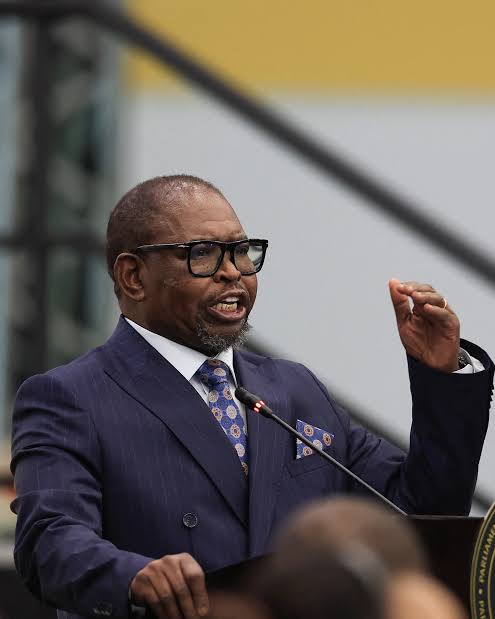
Godongwana made the announcement in the mid-year budget speech. He said the government “is in a stronger position to respond” because it has rebuilt its fiscal buffers. The relief, he said, will ease cost-of-living pressure without compromising the sustainability of the budget.
Eyewitness News (EWN) reported that the money comes from returning 10 billion rand that had been transferred to the Central Energy Fund to the National Revenue Fund. Treasury Director General Duncan Pieterse told the broadcaster that relief makes sense to Treasury as long as it is done in a “fiscally neutral manner.”
Not everyone said the step went far enough. Bobby Ramagwede, chief executive of the Automobile Association (AA), told EWN the relief was not enough and that the association had pushed for a cut since the Middle East conflict began. He said it could be funded through “better fiscal management.” Economist Sifiso Skenjana, managing director of ESG Analytics, called the relief a good investment given household fuel pressures and said 15 to 22 per cent of spending by the lowest-earning households goes on transport.
The levy cut comes with an improved fiscal outlook, according to Reuters. The consolidated budget deficit for the current fiscal year is now projected at 3.9 per cent of gross domestic product, slightly below the 4.0 per cent forecast in February. The Treasury reported a revenue overrun of 54.1 billion rand, and said the extra funds will support infrastructure, ease spending pressures, build reserves and pay down debt. South Africa has run a main budget primary surplus since 2023.
Economic growth is forecast at 1.2 per cent this year, down from the 1.6 per cent projected in February. The Treasury said its fiscal strategy had helped restore confidence, citing positive actions by all three major credit rating agencies despite geopolitical uncertainty.
The finance minister also set out plans for a principles-based fiscal anchor law in 2027. It would centre on fiscal sustainability, defined as the state’s ability to meet current and future spending and debt-service obligations while managing fiscal risks. Future administrations would present a fiscal plan covering objectives, strategy, key assumptions and risks, through amendments to public finance management legislation.
Reforms to state-owned companies Eskom and Transnet, and improvements in municipal management, remain priorities, Reuters reported.
