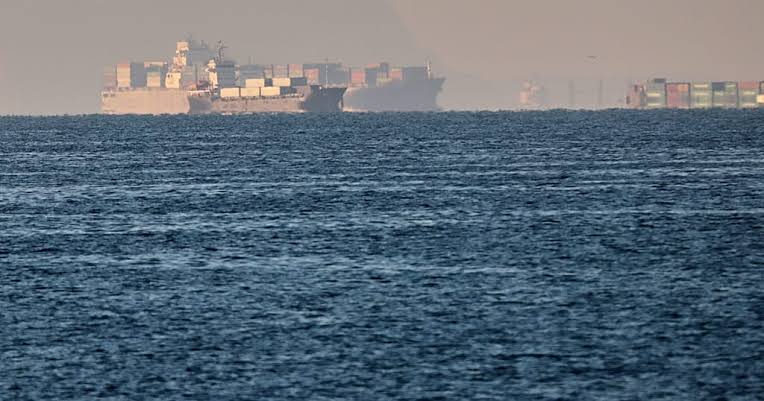
GENEVA, November 28 (Radarr Africa) – Global seaborne trade is projected to record no growth in 2026, the United Nations Trade and Development agency (UNCTAD) said in its Review of Maritime Transport 2026, with African importers among those facing the heaviest costs as shipping disruption raises freight rates.
The agency said trade volumes grew 1.9 per cent in 2025, to 12.3 billion tonnes, which was half the 3.9 per cent growth of 2024. It projects zero growth in 2026 and a recovery of 3.2 per cent in 2027. Distances travelled are still rising, with miles sailed projected to increase by 1.5 per cent this year, meaning ships are working harder for the same volume of cargo.
More than 80 per cent of goods traded worldwide move by sea, including food and fuel. For importing economies, higher shipping costs flow directly into prices at home.
UNCTAD said four key maritime chokepoints are under pressure at the same time: the Strait of Hormuz, the Red Sea, the Black Sea and the Panama Canal. The disruption has lengthened transit times, raised fuel costs and added to congestion at ports. Alternative ports, inland transport and logistics arrangements have kept trade moving, but at higher cost.
Attacks on shipping linked to the Iran-US war created a near standstill in the flow of oil and gas from the Strait of Hormuz, UNCTAD said. War-risk premiums for a $100 million tanker reportedly jumped within days of the disruption from about $200,000 to $1 million per voyage, and container lines added emergency war-risk charges and fuel surcharges.
Since late 2023, ships have also been diverted around southern Africa to avoid security risks in the Red Sea, adding distance and fuel use to routes between Asia and Europe.
Freight rates more than doubled in the period to August, while crude oil tanker rates reached record highs on some routes, UNCTAD said. The effect falls most heavily on vulnerable economies. If high marine fuel prices persist into 2027, shipping costs alone could push consumer price inflation in the least developed countries to almost twice the global average.
Most of the least developed countries are in Africa, and the agency named them, together with small island developing states, as the economies most exposed. Their imports often require several shipping connections, and each extra leg adds cost.
“Every additional mile means more fuel, more time, and more cost,” said Pedro Manuel Moreno, UNCTAD’s Acting Secretary-General. He warned that disruption in one critical maritime corridor can quickly become a cost-of-living crisis thousands of miles away.
The report also contains some positive findings for developing economies. Over the past two decades the least developed countries have improved their shipping connectivity three times faster than the rest of the world. South-South container routes linking Asia, Africa, the Middle East and Latin America grew by 12.1 per cent last year and accounted for nearly one third of growth in containerised trade.
Moreno said those gains matter but do not remove the underlying vulnerabilities. UNCTAD recommended that the countries most at risk build shared stocks of food staples and fuel, agree alternative trade routes in advance, and put customs procedures in place that keep essential goods moving during a disruption.
The Review of Maritime Transport is UNCTAD’s annual assessment of the shipping industry and is regarded as the authoritative global report on seaborne trade. It was released on Thursday, November 26.
