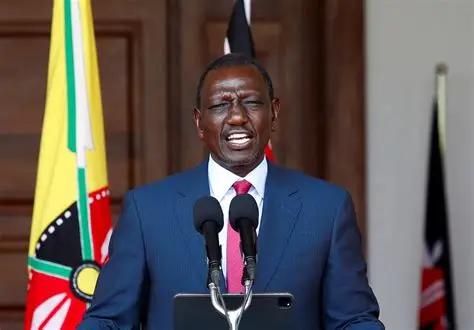
Uncertainty is growing among Burundians living and working in Kenya after President William Ruto ordered foreign-owned small businesses to shut down, prompting hundreds of Burundian nationals to seek travel documents to return home.
Hundreds of Burundians living in Kenya reportedly gathered at their embassy in Nairobi on Monday, just days after Ruto directed foreigners operating small businesses to close their ventures.
Kenya has traditionally attracted migrants from across the East African Community (EAC), whose member states allow citizens to move freely within the regional bloc.
However, Ruto last week gave foreign-owned small businesses until Monday to close, saying the country “has not built investor confidence for hawkers”.
The directive has raised concerns among foreign nationals, particularly Burundians who depend on street vending and other small-scale businesses for their livelihoods in Nairobi.
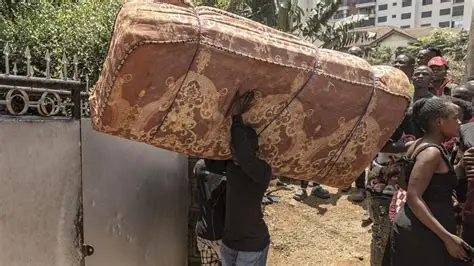
At the Burundi embassy, crowds carrying large brown envelopes waited for hours as they sought the necessary documents to leave Kenya. Suitcases and plastic bags could also be seen piled up within the embassy compound as some prepared to return home.
“They’ve expelled us like animals,” Pastor Jean-Baptiste Ndayizeye told AFP.
Ndayizeye claimed that two of his neighbours had been attacked and robbed, comparing the situation to xenophobic violence previously experienced by foreigners in South Africa. AFP said it was unable to independently verify the allegations.
“What South Africans did to foreigners and what Kenyans are doing is the same thing,” he said, adding that Burundians had not been given sufficient warning.
Another Burundian, Eric Bizimana, said he moved to Kenya in 2022 after struggling with years of unemployment in Burundi. He explained that he had never applied for a work permit because of the high cost involved.
“They’re so sad” to be leaving Kenya, said Philemon Jaika Adamba, a Kenyan motorcycle taxi driver who had driven two Burundians to the embassy. “It’s not fair.”
Burundi Raises Concerns Over Treatment of Nationals
Burundi, which has a population of about 15 million and remains one of the world’s poorest countries, is a member of the EAC alongside Kenya, the region’s economic powerhouse.
Burundi’s Foreign Minister Edouard Bizimana condemned what he described as “violence against foreigners, particularly Burundians”.
“Kenya government is responsible for the lives of Burundians living in Kenya,” he posted on X.
“Letting Kenyan civilians do the work of the police gives the impression of a failed state because it gives free rein to violence, to looting, and to xenophobia,” he added.
Kenya’s junior Foreign Minister Korir Sing’Oei later visited the Burundi embassy on Monday, where he apologised to Burundian nationals and assured them that police would protect areas where reports of violence had emerged.
Sing’Oei said there had been a misunderstanding over the president’s directive.
“Because of this lack of understanding, many have been attacked by their neighbours and their friends,” he said.
“Our main aim is to know how you are living, where you are, that you have identification, and that your jobs are registered,” he said.
Kenya Opens Documentation Process
Kenyan government spokesperson Charles Owino said authorities had established a process to help foreign nationals regularise their documentation.
He said the government had opened a “formal documentation and registration window” and urged Burundian nationals to submit their documents through their embassy.
“The government recognises that due to historical circumstances and regional dynamics, a number of east African nationals, including several Burundians, reside and operate in Kenya without full documentation,” Owino said.
The developments have heightened uncertainty among Burundians and other foreign nationals whose livelihoods depend on small businesses and informal trading in Kenya, as authorities move to enforce the new directive while addressing concerns over documentation, safety and regional relations.
