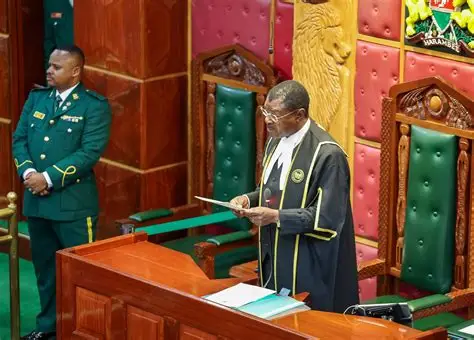
The 10th National Assembly is set to resume from its extended recess on September 29, with concerns growing that preparations for the 2027 elections could affect the progress of pending bills, constitutional reforms and oversight activities during the remaining months of its tenure.
Lawmakers are returning to a crowded legislative agenda that includes hundreds of pending bills and an incomplete review of the 1999 Constitution. The constitutional review was initially expected to be one of the major achievements of the current Assembly, but progress has slowed considerably.
More than 30 constitutional alteration proposals have been considered, covering issues including local government autonomy, special legislative seats for women, independent candidacy and judicial reforms. However, only the State Police bill has passed both chambers and been forwarded to the state Houses of Assembly.
The remaining proposals are still at different stages of the legislative process, leaving lawmakers with a shrinking period to complete them before the Assembly’s tenure ends.
Clement Nwankwo, executive director of the Policy and Legal Advocacy Centre (PLAC), said political considerations had begun to affect the legislative agenda. He noted that lawmakers had missed their December 2025 target for completing the reforms.
“The indication we received at the beginning was that, by December 2025 at the latest, these bills would have been passed,” Nwankwo said.
“Unfortunately, I think politics set in far too early. We are almost at the point where politicians are focused on the struggle for power.”
Nwankwo had earlier called on lawmakers to “step down” from political activities temporarily so they could complete the outstanding reforms before campaign activities intensify.
The pressure is particularly significant because the 2027 general election is scheduled for January. By the final quarter of 2026, many lawmakers are expected to be involved in political consultations, party activities, constituency mobilisation and preparations for the elections.
Lawmakers seeking another term will need to campaign to retain their seats, while those pursuing other elective positions will have different political priorities. Those who have lost their party tickets may also have less incentive to commit political resources to legislative activities during the remaining period.
The situation could result in an irregular legislative schedule, with periods of increased activity followed by slower progress as political engagements take priority.
The backlog extends beyond constitutional amendments. Senate records showed that, as of April 2026, 1,033 bills had been introduced, but only 106 had been passed. Another 453 were at second reading, 424 were before committees and 38 were at the post-committee stage.
This leaves the National Assembly with the task of determining which proposals can realistically be completed before the end of its tenure.
Senate President Godswill Akpabio has maintained that political activities will not prevent lawmakers from carrying out their constitutional responsibilities.
“We are elected for four years, and we are going to work for four years. Anybody who is walking on the tiny rope must be able to do the balancing act,” Akpabio said recently.
He said legislative duties and campaign activities could be managed alongside one another.
“Campaigns can be fixed in the afternoons or evenings while we do our work in the mornings,” he said.
However, the Assembly’s sitting record has raised questions about how effectively that balance can be maintained. As of July, the 10th Assembly had recorded 173 sitting days in 2023, 141 in 2024 and 26 sitting days between January and May 2026. Concerns have also been raised over prolonged adjournments, attendance and the growing backlog of legislation.
Constitutional amendments face additional procedural hurdles because they require approval by two-thirds of both chambers before being forwarded to the state Houses of Assembly. At least 24 of the 36 state legislatures must then approve the amendments.
The State Police proposal has already entered the state-level stage, while other proposed alterations remain at the federal legislative level.
Kamoru Ogunlana, Clerk to the National Assembly, asked the state Houses of Assembly to communicate their resolutions within 30 days of receiving the State Police bill, while noting that the period was an administrative expectation rather than a constitutional deadline.
Jide Ojo, a development consultant and public affairs analyst, also stressed the need to complete constitutional reforms early enough for changes affecting the electoral process to be incorporated into preparations for the 2027 elections.
“All the proposals should have been transmitted.”
Ojo described the exercise as a “waste of public resources”, arguing that the National Assembly should have considered the 37 proposed alterations together rather than forwarding only the State Police Bill to the state Houses of Assembly.
Electoral reforms are also expected to remain an important part of the legislative agenda ahead of the 2027 elections. Although the National Assembly has passed the Electoral Act 2026, discussions over some of its provisions and their possible effects on lawmakers seeking re-election are continuing.
The House has also reintroduced some sections of the Electoral Act for amendment.
Nwankwo said legislative performance should not be judged solely by the number of bills introduced or passed, but also by whether the resulting laws improve governance and whether lawmakers effectively carry out their oversight responsibilities.
“It is not enough to have a long list of proposals,” Nwankwo said.
“The important thing is to ensure that the reforms are actually concluded.”
With the 10th National Assembly having roughly nine months remaining in its tenure, the effective legislative window could become shorter as political activities surrounding the 2027 elections intensify.
Unless pending constitutional proposals move quickly through committee consideration, plenary voting and, where required, the state Houses of Assembly, some of the reforms could remain unfinished when the current Assembly’s tenure ends.
