By Radarr Africa Business Desk
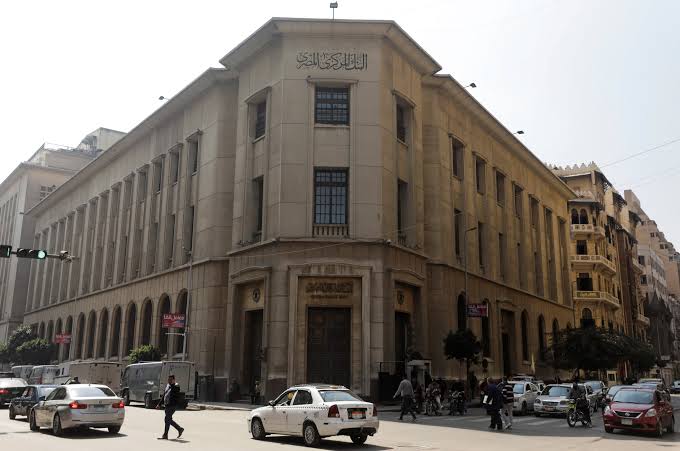
LAGOS, November 2 (Radarr Africa) – The Central Bank of Egypt (CBE) surprised analysts on October 29 by raising its key interest rate by 100 basis points to 20 per cent from 19 per cent, its first increase since March 2024, according to Trading Economics.
Analysts had expected rates to stay unchanged, the report said. The CBE’s Monetary Policy Committee also lifted the overnight lending rate from 20 per cent to 21 per cent and the main operation rate from 19.5 per cent to 20.5 per cent, The Rio Times reported. The committee’s next meeting is on December 17.
Trading Economics said the central bank aims to keep inflation expectations anchored and protect the disinflation trend amid challenging external conditions and high uncertainty.
Annual urban inflation eased for a second straight month, to 13.9 per cent in September from 14.5 per cent in August, according to the same report. That is still well above the CBE’s target of 7 per cent, plus or minus two percentage points.
At its September meeting, the CBE held rates at 19 per cent for a sixth consecutive time, Trading Economics reported. BusinessDay reported at the time that the bank held its deposit rate at 19 per cent and its lending rate at 20 per cent, and that urban inflation had slowed to 14.5 per cent in August from 14.9 per cent in July while core inflation rose to 14.9 per cent from 14.7 per cent. Egypt’s growth slowed to 4.7 per cent in the second quarter from 5 per cent in the first, BusinessDay said.
On October 30, Mohamed El-Damati, a food-industry leader at the Federation of Egyptian Industries, said the one-point increase will widen the budget deficit, The Rio Times reported. He put the extra cost at about 150 billion Egyptian pounds, or about US$2.7 billion, for each added point.
The Rio Times said the Finance Ministry has not published a matching figure.
El-Damati argued that holding rates would have been the better choice. He said “inflation comes from higher costs and not from excess money”, according to the report.
He also expects the International Monetary Fund (IMF) to press for higher fuel prices or smaller fuel subsidies, The Rio Times reported. The report said the IMF has not commented on the CBE decision.
El-Damati said the Egyptian pound was trading at about 56 to the US dollar on October 31, compared with about 46 previously. He said raw material prices had also risen sharply, citing milk powder, which he said went from US$2,600 to between US$4,000 and US$4,200 per tonne.
The move contrasts with decisions elsewhere on the continent. In September, BusinessDay reported, the Central Bank of Nigeria cut its Monetary Policy Rate by 350 basis points to 23 per cent, the South African Reserve Bank raised its repo rate by 25 basis points to 7.25 per cent, and the central banks of Ghana and Morocco held rates at 14 per cent and 2.25 per cent respectively.
In Kenya, where inflation rose to 7.3 per cent in October, the central bank’s policy rate has stood at 8.75 per cent since February, according to Briefs Finance.
