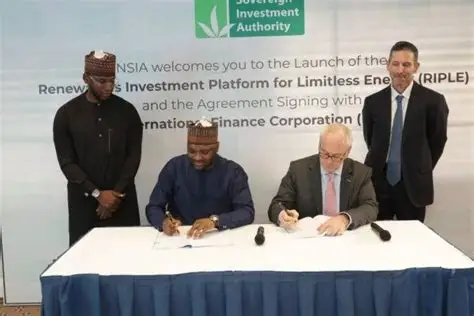
The Nigeria Sovereign Investment Authority (NSIA) has launched a $300 million Nigeria Distributed Renewable Energy (DRE) Fund to accelerate private-sector investment in renewable energy and improve electricity access for underserved communities and businesses across the country.
The fund reached its commercial launch milestone on the sidelines of the United Nations General Assembly in New York, marking the transition from fund structuring to active capital deployment in Nigeria’s distributed renewable energy sector.
The initiative is being implemented through a partnership involving NSIA, Africa50, Sustainable Energy for All (SEforALL), and the World Bank, with support from the International Solar Alliance (ISA).
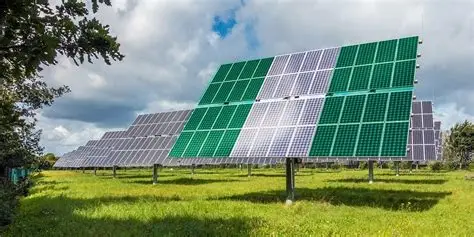
The fund will finance distributed renewable energy projects, including mini-grids and standalone solar systems, as Nigeria seeks to bridge its electricity access gap, strengthen energy security, and support economic growth.
Speaking at the launch, NSIA Managing Director and Chief Executive Officer, Aminu Umar-Sadiq, described the initiative as a major step forward for Nigeria’s renewable energy market.
“This is a major development milestone. It is a strategic signal to markets, investors, governments and development partners that Nigeria’s distributed renewable energy market is investable, credible and ready to operate at scale.”
Umar-Sadiq said the commercial launch moves the initiative from the planning stage to the deployment of capital into renewable energy projects nationwide.
The fund aligns with Nigeria’s development priorities and Mission 300, the African initiative aimed at providing electricity access to 300 million people by 2030.
Africa50 Chief Executive Officer Alain Ebobissé said the partnership combines NSIA’s local market expertise with Africa50’s investment and fund-management experience across the continent.
“What sets the Nigeria DRE Fund apart is the strength of the partnership.”
He added that the initiative is designed to transform Nigeria’s energy challenges into investment opportunities while creating a model that can be replicated across Africa.
SEforALL Chief Executive Officer and UN Special Representative for Sustainable Energy for All, Damilola Ogunbiyi, described the launch as an important milestone in Nigeria’s efforts to expand electricity access and advance Mission 300.
She said the dedicated financing mechanism demonstrates how country-led initiatives can translate continental energy goals into tangible investments and new electricity connections.
The fund comes at a time when distributed renewable energy solutions are playing an increasingly important role in supplying electricity to communities and businesses that remain outside or are inadequately served by conventional power infrastructure.
Mini-grids and standalone solar systems have become key tools for extending electricity access to rural communities, small businesses, and other productive sectors of the economy.
Director-General of the International Solar Alliance, Ashish Khanna, described the initiative as a landmark project under the Mission 300 platform, highlighting its potential to show how innovative financing can attract private investment into renewable energy.
He noted that the Nigerian model could serve as a blueprint for other African countries looking to establish country-level investment vehicles for renewable energy deployment.
World Bank Managing Director of Operations, Anna Bjerde, said reliable and affordable electricity remains essential for job creation and economic transformation across Africa.
She noted that the World Bank was a founding partner of the initiative and that its initial $25 million contribution through the International Development Association (IDA) reflects its commitment to mobilising finance and expanding electricity access across the continent.
The Nigeria DRE Fund is jointly managed by NSIA and Africa50 and is designed to support the growth of African renewable energy companies. Stakeholders say it will help mobilise large-scale capital, deepen local energy markets, and demonstrate how public and development finance can attract greater private investment into clean energy.
Nigeria is the first country-level demonstration under the broader continental financing platform, with expectations that the initiative will provide lessons for other African nations seeking to expand renewable energy investment and improve electricity access.
